


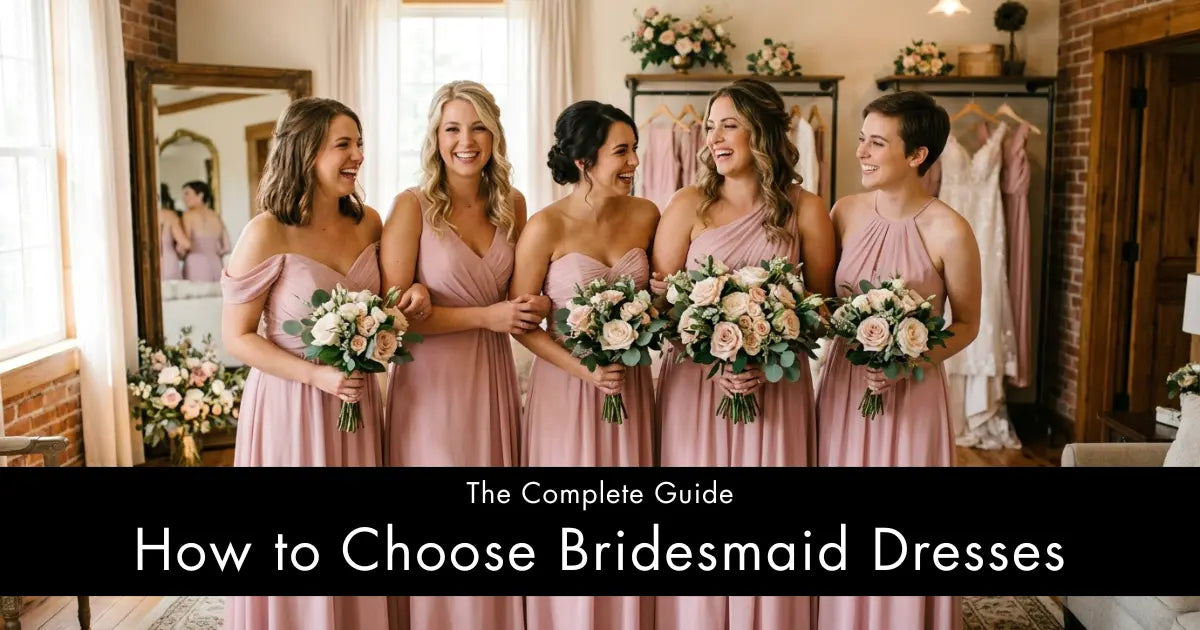
How to Choose Bridesmaid Dresses
Choosing bridesmaid dresses comes down to five things: set a clear budget, order early (about six to eight months before the wedding), pick a color and fabric that suit the season, decide between a matching or mismatched look, and choose styles that flatter every person in your party. Get those five right and the rest falls into place. The average bridesmaid dress in the U.S. costs around $128, according to The Knot's 2026 Real Weddings Study, and most fall between $100 and $300. So while the choice matters, it doesn't have to break anyone's budget.
If you're a bride, maid of honor, or a bridesmaid trying to make a smart pick, this guide walks you through every decision in plain English. We'll cover cost, timing, style, color, fabric, sizing, and how to keep the whole group happy, including junior and plus size members.
By the end, you'll know exactly how to choose bridesmaid dresses that look beautiful in photos and feel comfortable all day long.
What Should You Decide First?
Before you look at a single dress, settle two things: your budget and your timeline. These two choices shape every option after them.
Money matters more than people admit. Being a bridesmaid isn't cheap, and the dress is only part of it. The Knot reports that the full cost of being a bridesmaid, once you add the bachelorette party and gifts, averages close to $1,900. A LendingTree survey found that about a third of people in a wedding party went into debt to cover these costs. That's why picking affordable bridesmaid dresses is a kindness, not a compromise. A great gown doesn't need a high price tag, and setting a clear number early keeps everyone relaxed.
Timing is the second big decision. It's easy to underestimate how long dresses take to arrive.
When Should You Order Bridesmaid Dresses?
You should order bridesmaid dresses about six to eight months before the wedding. Most retailers, including David's Bridal, recommend this window, and there's a good reason for it. Many bridesmaid dresses are made to order, which means they aren't sitting in a warehouse ready to ship. The Knot notes that made-to-order gowns can take up to eight weeks to produce and deliver. Add alterations on top of that, and the timeline gets tight fast.
Here's a simple schedule that works for most weddings:
- 8 months out: Agree on a color, budget, and general style with the bride.
- 6 months out: Place all orders together so dresses come from the same dye lot.
- 6 to 8 weeks out: Book the first fitting for alterations.
- 1 month out: Do the final fitting and confirm everything fits.
If your wedding is less than four months away, don't panic. Just shift your search toward off-the-rack or ready-to-ship styles instead of custom orders. Ordering late usually means fewer color and size choices, so the earlier you start, the more freedom you have.
How Much Should Bridesmaid Dresses Cost?
Most bridesmaid dresses cost between $100 and $300, with an average near $128. Spending tends to run a little higher in the Northeast and Mid-Atlantic, closer to $140 per dress, according to The Knot. Prices also shift by budget and by the formality of the wedding.
You don't have to spend a lot to look elegant. Plenty of affordable bridesmaid dresses land under $100 without looking cheap, especially in classic fabrics and simple cuts. At Formal Dress Shops, you can shop by price tier, browsing options under $100, under $200, or under $300, which makes it easy to match the dress to your group's comfort level.
A quick tip that saves real money: order free fabric swatches before you commit. Seeing the true color in your own light prevents costly returns and disappointment. Screens rarely show the exact shade, so a small swatch is worth the wait.
Should Bridesmaid Dresses Match or Mix?
Mismatched bridesmaid dresses are now the most popular choice. Zola's 2025 First Look Report ranked "mismatched bridesmaids attire" as its number one "in" trend, with 85% of couples embracing the look. Instead of everyone wearing the exact same gown, each person picks a style that suits her body and taste while sharing a common thread.
The trick is to keep one element consistent so the group still looks united. The easiest anchors are color and fabric. You might, for example, put everyone in the same shade of sage green satin but let each bridesmaid choose her own neckline, whether that's a halter, a one-shoulder cut, or a soft V-neck. That way the photos feel cohesive, not chaotic, and no one is stuck in a style that doesn't flatter her.
This trend has grown for a practical reason: bodies are different. A single dress that looks stunning on one person may feel unflattering on another. Letting each bridesmaid pick her own silhouette solves that problem while keeping the wedding party polished and intentional.
If you prefer a classic matching look, that's still a beautiful choice. Just be extra thoughtful about picking a universally flattering style, which we'll cover below.
How Do You Pick the Right Color and Fabric?
Color sets the mood, so start with the wedding's season and setting. For 2025 and 2026, two directions are trending. Rich, moody tones like chocolate brown, burgundy, emerald, and deep navy feel warm and elegant, especially for fall and winter. Soft, nature-inspired shades like sage, champagne, butter yellow, and dusty blue feel fresh and light, which suits spring and summer beautifully. Floral bridesmaid dresses are also having a strong moment, adding a romantic, garden feel that works well for outdoor and daytime weddings.
Fabric is just as important as color, and the right choice depends heavily on the season and the venue.
Choosing Fabric by Season
Each fabric behaves differently, so match it to the weather and the formality of your event:
- Chiffon is light, airy, and flows beautifully, making it ideal for spring, summer, and beach weddings.
- Satin is smooth, slightly shiny, and elegant, which makes satin bridesmaid dresses a favorite for fall, winter, and formal evening events.
- Crepe is matte, structured, and resists wrinkles, so it travels well and suits modern, minimalist looks.
- Tulle adds soft volume and romance, working nicely as an overlay in any season.
- Velvet is rich and warm, but save it strictly for cold-weather weddings.
Industry designers point to liquid satin as one of the defining fabrics of recent bridal seasons because it drapes smoothly and photographs like a dream. If your wedding leans formal or takes place in cooler months, satin bridesmaid dresses are a safe and stylish bet.
Long or Short: Which Length Is Best?
The right length depends on how formal your wedding is and how comfortable your bridesmaids want to feel. Long bridesmaid dresses are the traditional choice for formal and evening weddings. They read as elegant and timeless, and they photograph beautifully in ballrooms, gardens, and grand venues. A floor-length bridesmaid gown gives a classic, dressed-up feel that never really goes out of style.
Short bridesmaid dresses, on the other hand, shine at casual, daytime, and warm-weather weddings. They're easier to move and dance in, and they often cost a little less. Midi lengths, which fall between the knee and ankle, have also become popular because they strike a nice balance between formal and relaxed.
You don't have to pick just one. Mixing lengths within the mismatched trend can look intentional and modern, as long as you keep the color and fabric consistent across the group.
How Do You Flatter Every Body Type?
The most reliable rule in bridal fashion is simple: A-line and empire-waist silhouettes flatter nearly everyone. They skim the body gently, define the waist, and suit almost every figure, which is why they're such a safe starting point for a group with different shapes.
Beyond that, a few gentle guidelines help each person feel confident:
For a pear shape, an A-line or fit-and-flare cut balances wider hips and draws the eye upward. For an apple shape, an empire waist skims the midsection while a V-neckline elongates the frame. For an hourglass figure, fitted, mermaid, or trumpet styles show off a defined waist. For a rectangle or athletic build, details like ruching, a belt, or a sweetheart neckline add soft curves.
This is exactly where the mismatched trend earns its popularity. When every bridesmaid can pick the cut that suits her body within one shared color, everyone looks and feels their best. As bridal experts often put it, keep the color consistent and let the silhouette vary within reason.
How Do You Get the Size Right?
Order by your measurements, not your usual clothing size, and when you're between sizes, size up. This is the single most important sizing rule, and nearly every bridal retailer repeats it. Bridal sizing does not match everyday street sizing, so the number on the tag may feel different from what you normally wear. That's normal.
Before ordering, measure the bust, waist, hips, and hollow-to-hem, then compare those numbers to the brand's own size chart rather than guessing. If one measurement is larger than the others, order to that larger measurement. Taking a dress in is far easier and cheaper than letting it out, so err on the roomier side. Plan for alterations in every budget, since standard dresses are cut to a chart, not to a specific person. Typical alterations run about $75 to $150, and it helps if the whole party uses one tailor, who may offer a group discount.
Also keep height in mind. Anyone 5'8" or taller, or wearing high heels, should ask about extra length so the hem falls correctly.
What About Junior and Plus Size Bridesmaids?
A great wedding party includes everyone comfortably, and that means thinking about younger and curvier members from the start.
Junior bridesmaid dresses are made for girls roughly 8 to 16 years old, too old to be a flower girl but too young for adult styles. The key is keeping the look age-appropriate: modest necklines, no strapless or body-hugging cuts, and shorter or tea-length hems for the youngest. You can coordinate their color and fabric with the adult party, or use a softer shade to set them apart sweetly. Formal Dress Shops offers a dedicated junior bridesmaid dresses collection, which makes matching the group much simpler.
Size inclusivity has come a long way, and that's worth celebrating. Many retailers now offer plus size bridesmaid dresses in the same styles, colors, and prices as everything else, with no separate section and no upcharge. Size ranges commonly stretch from 0 to 30 or beyond. Flattering picks for fuller figures include A-line cuts, empire waists, and V-necklines, and stretch fabrics or added sleeves boost comfort and coverage.
Shopping a true plus size bridesmaid dresses range means every bridesmaid feels included rather than squeezed into a limited set of options.
How Do You Find Affordable and Wholesale Bridesmaid Dresses?
Saving money on bridesmaid dresses is easier than most people think, and it starts with a few smart habits. Order free color swatches before buying, watch for seasonal sales, and consider at-home try-on programs so you can check fit before committing. If your budget is tight, focus your search on affordable bridesmaid dresses under $100 or $200, which are widely available in classic fabrics and flattering cuts.
For larger wedding parties, wholesale bridesmaid dresses can bring real savings. Wholesale and bulk buying lets you order several dresses together, often at a lower price per gown, and sometimes with custom color or size options. Pair that with a single tailor for the group, who may offer a discount of 10% to 20% on alterations, and the total cost drops noticeably.
When you shop a store that carries a full range, from budget-friendly picks to long bridesmaid dresses, short bridesmaid dresses, and satin bridesmaid dresses in one place, comparing styles and colors becomes far simpler. Formal Dress Shops brings these collections together with free worldwide shipping and easy returns, so you can order, try, and adjust without stress.
Bridesmaid Dress Shopping Checklist
Use this checklist to keep the process organized from first search to final fitting. Working through it in order prevents the two most common mistakes: ordering too late and skipping alterations.
- Confirm the budget with the bride and the whole party before shopping.
- Lock the color and formality so everyone searches the same direction.
- Take accurate measurements (bust, waist, hips, hollow-to-hem) for each person.
- Order free swatches to check the true shade in natural light.
- Place all orders together about six to eight months out, from the same dye lot.
- Choose matching or mismatched and pick one anchor detail to tie the group together.
- Book alterations four to six weeks before the wedding, ideally with one shared tailor.
- Add extra length for anyone 5'8" or taller, or wearing high heels.
- Do a final fitting about one month before the big day.
Print this or drop it into a shared note so every bridesmaid can follow the same steps. A little organization here saves money, stress, and last-minute rush fees.
Bridesmaid Dress Color Coordination Guide
Coordinating color is where a wedding party either looks polished or looks accidental. The safest approach is to choose one main color and build around it, rather than letting everyone pick freely.
Start by matching the color to your season and setting. Deeper tones like burgundy, emerald, navy, and chocolate suit fall and winter and formal venues, while soft shades like sage, blush, champagne, and dusty blue feel right for spring, summer, and outdoor weddings.
Once you have your main color, you have three reliable ways to coordinate the group:
- One shade for all: Everyone wears the exact same color for a classic, unified look.
- Tonal or ombré: Bridesmaids wear different shades of the same color family, such as light to deep green, for soft depth in photos.
- Mismatched within a palette: Each person picks a complementary color from an agreed set, like sage, olive, and forest, so the group still reads as one team.
Whichever route you choose, keep the fabric consistent, because the same color can look completely different in satin versus chiffon under the same lighting. It also helps to coordinate with the wedding flowers and the groomsmen's attire so the whole party feels connected.
Always confirm shades with a physical swatch, since screens rarely show the true color.
Wedding Dress vs Bridesmaid Dress Coordination
The bridesmaids should complement the bride, never compete with her or blend into her. That single rule guides every good coordination choice between the wedding dress and the bridesmaid dresses.
The most important guideline is contrast: bridesmaid dresses should be clearly different from the wedding gown so the bride stands out. If the bride wears white or ivory, avoid putting bridesmaids in very pale shades like white, cream, or the palest blush, which can wash out the difference in photos. A clear step down in tone or a defined color keeps the bride as the focal point.
Beyond color, aim to echo the wedding's overall style rather than copy the gown itself. If the bride's dress is sleek and modern, structured crepe or satin bridesmaid dresses feel in step; if it's soft and romantic, flowing chiffon or floral bridesmaid dresses match the mood. You can also tie the looks together with small shared details, such as a similar neckline family, matching metallic tones in jewelry, or a fabric that appears in both the gown and the sashes.
The goal is a wedding party that clearly belongs together, with the bride at the center of it.
Dress Your Whole Party with Confidence
Choosing bridesmaid dresses doesn't have to feel overwhelming. Start with a clear budget and an early timeline, then work through color, fabric, length, and fit one step at a time. Lean on the A-line and empire-waist silhouettes when you want something universally flattering, embrace the mismatched trend when your group has different body types, and always order by measurement with a little room to spare.
Most of all, remember that the best bridesmaid dresses are the ones your friends feel confident and comfortable wearing. Set a fair budget, respect everyone's shape and style, and give yourselves plenty of time. When you're ready to shop, Formal Dress Shops brings long, short, satin, floral, junior, and plus size styles together in one place, with free worldwide shipping and easy returns to make the whole process simple.
Do that, and the entire wedding party will look effortless in every photo, exactly as you imagined.
Frequently Asked Questions
How much do bridesmaid dresses cost on average?
Bridesmaid dresses cost about $128 on average, with most priced between $100 and $300 (The Knot, 2025). Budget-friendly options under $100 are widely available.
How far in advance should you order bridesmaid dresses?
Order bridesmaid dresses six to eight months before the wedding. Many are made to order and take up to eight weeks, plus a few weeks for alterations. For weddings under four months away, choose ready-to-ship styles.
Do bridesmaid dresses run true to size?
No. Bridal sizing runs differently from everyday clothing, so order by your measurements, not your usual size. Compare your bust, waist, and hips to the brand's chart, order to your largest measurement, and size up when in between.
Can bridesmaids wear different dresses?
Yes. Mismatched bridesmaid dresses are the most popular choice today, used by 85% of couples (Zola, 2025). Keep one element consistent, usually the color or fabric, and let each person pick a flattering silhouette.
What color should bridesmaid dresses be?
Choose a color that complements the bride without matching her gown. Deep tones like burgundy, emerald, and navy suit fall and winter; soft shades like sage, blush, and dusty blue suit spring and summer. Avoid white or cream.
Are there junior and plus size bridesmaid dresses?
Yes. Junior bridesmaid dresses fit girls roughly 8 to 16 in modest styles, and plus size bridesmaid dresses come in the same styles, colors, and prices as standard sizes, commonly ranging from 0 to 30 or beyond.


,%20pick%20a%20color%20and%20fabric%20that%20suit%20the%20season,%20decide%20between%20a...)
Dejar un comentario
Este sitio está protegido por hCaptcha y se aplican la Política de privacidad de hCaptcha y los Términos del servicio.