


Semi Formal vs Cocktail Attire: What’s the Difference for Women?
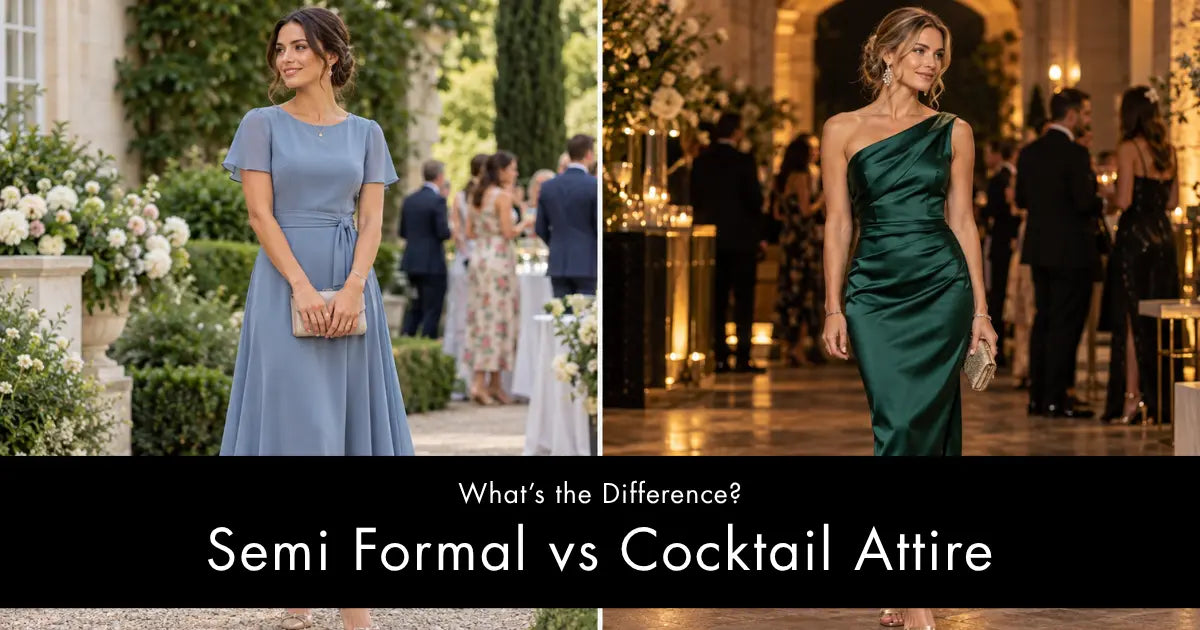
Semi formal and cocktail attire are close, but they are not the same. Cocktail attire is the dressier of the two. It usually means a knee to midi length dress in a rich fabric for an evening event. Semi formal dresses cover a wider range, from polished daytime dresses to dressy separates.
If an invitation has left you staring at your closet, you are not alone. These two dress codes get mixed up all the time, even by hosts. The good news is that once you understand what each one asks for, picking the right outfit becomes simple.
This guide explains both dress codes in plain terms, shows you how they compare, and helps you choose the right look for weddings, work parties, and other events.
The Quick Difference Between Semi Formal and Cocktail Attire
Think of dress codes as a ladder. Casual sits at the bottom and black tie sits near the top. Semi formal sits in the middle. Cocktail attire sits one small step above it.
The main difference comes down to three things. The first is time of day. Cocktail events almost always happen in the evening, while semi formal events can happen at any time. The second is fabric and shine. Cocktail looks lean toward satin, silk, velvet, sequins, and lace, while semi formal looks can use softer, simpler fabrics like crepe, chiffon, or a nice cotton blend. The third is overall polish. A cocktail outfit should feel like a party. A semi formal outfit should feel neat and put together, but it does not need to sparkle.
Here is a side by side view to make it clear.
| Feature | Semi Formal Attire | Cocktail Attire |
|---|---|---|
| Typical time | Day or evening | Evening, usually after 5 or 6 pm |
| Dress length | Knee, midi, or tea length | Knee to midi length |
| Fabrics | Crepe, chiffon, cotton blends, jersey | Satin, silk, velvet, lace, sequins |
| Colors | Lighter shades by day, deeper by night | Rich jewel tones, black, metallics |
| Pants or separates | Yes, if tailored | Yes, but they should look dressy |
| Overall feel | Polished and neat | Festive and elegant |
What Does Semi Formal Attire Mean for Women?
Semi formal attire means dressing up without going all the way to evening gown territory. It is the most flexible dress code on the ladder. That is why it shows up so often on invitations for weddings, graduations, dinners, holiday gatherings, and work events.
For women, semi formal dressing gives you a lot of choice. A dress is the most common pick, but a dressy jumpsuit or a well tailored skirt and blouse can also work. The key is that the outfit looks intentional. Jeans, sneakers, and everyday cotton T-shirts are not part of this dress code.
Common Semi Formal Dress Styles
Women’s semi formal dresses come in many shapes. Some of the most reliable styles are:
- A-line dresses that fit at the waist and flare gently toward the hem
- Wrap dresses that flatter most body types and work day or night
- Sheath dresses with a clean, fitted shape that suits office and dinner events
- Midi slip dresses paired with a light jacket or wrap for cooler weather
- Fit and flare dresses in solid colors or soft prints
Length is flexible. Knee length, midi, and tea length all fit the dress code. A floor length gown is usually too much for a semi formal event unless the fabric is light and the style is simple.
Fabrics and Colors for Semi Formal Events
For daytime events, lighter fabrics and colors work best. Think chiffon, linen blends, and crepe in shades like blush, sage, sky blue, or soft florals. These look fresh in daylight and feel comfortable in warm weather.
For evening semi formal events, you can move to deeper shades like navy, emerald, burgundy, or plum. A little shine is fine, such as a subtle satin finish, but you do not need sequins or heavy beading.
What Is Cocktail Attire?
Cocktail attire is an evening dress code that sits just below formal. It asks you to look festive, stylish, and dressed for a party. The name comes from the cocktail party, a social event that became popular in the 1920s in the United States.
During that era, women began wearing shorter, lighter dresses that were easy to move and dance in. Over the next few decades, the cocktail dress became its own category of fashion. Designer Christian Dior is often credited with making the term “cocktail dress” popular in the late 1940s. The little black dress, made famous by Coco Chanel in 1926, is still the best known example of cocktail dress wear today.
Cocktail Dress Length and Fit
Most cocktail dresses fall somewhere between just above the knee and mid calf. This length is long enough to look elegant but short enough to feel lively. Very short minis can look too casual or clubby for many cocktail events, and full length gowns usually push the outfit into formal territory.
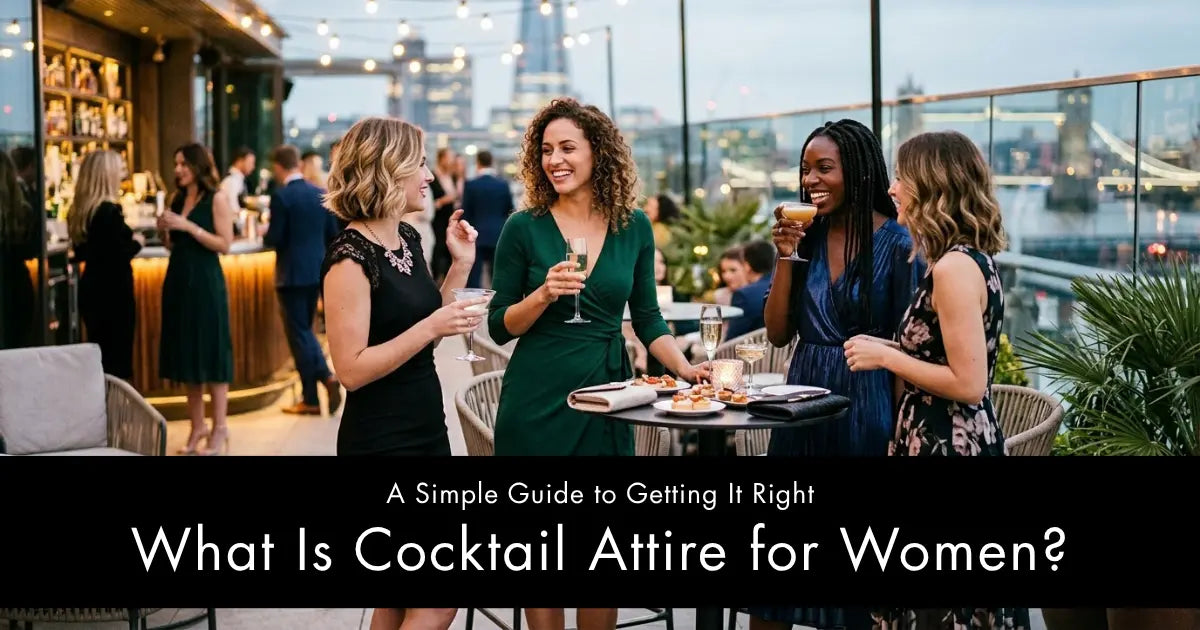
Fit matters a lot with cocktail apparel. The dress should be tailored to your body and feel comfortable to stand, sit, and walk in for a few hours. Cocktail events often involve standing, mingling, and holding a drink or small plate, so pick something you can move in easily.
Fabrics and Details That Define Cocktail Attire
Cocktail looks are where you can play with texture and shine. Popular choices include satin, silk, velvet, lace, crepe with a sheen, and fabrics with sequins or beading. Rich colors like emerald, sapphire, ruby red, and classic black all fit well. Metallics like gold and silver are also common, especially at holiday parties.
Details like a statement neckline, a bow, a cape sleeve, or a structured shoulder can make a cocktail dress stand out. You only need one or two of these details. Too many can make the look feel busy.
Semi Cocktail Attire and Formal Cocktail Attire Explained
Sometimes hosts add extra words to the dress code. This can feel confusing, but these terms simply tell you where on the ladder to aim.
Semi cocktail attire sits between semi formal and cocktail. It usually means a dressy outfit that does not need full party shine. A sleek midi dress in crepe or a satin skirt with a nice top fits well here. This dress code is common at early evening events, like a 5 pm reception or an after work celebration.
Formal cocktail attire sits at the top of the cocktail range. It means your dress should be extra polished, with luxe fabrics and refined details. Formal cocktail dresses often have structured shapes, beading, or rich materials like velvet and heavy satin. Some women choose an elegant midi or a sleek, simple floor length dress for this dress code. Think of it as one step below black tie optional.
How to Read the Dress Code on an Invitation
The invitation itself gives you more clues than just the dress code line. Before choosing your outfit, look at these details.
Check the Time of Day
Time is one of the strongest signals. Events that start before 5 pm lean more relaxed, even when they say semi formal. Events that start at 6 pm or later lean dressier. A semi formal dinner at 7 pm will look closer to cocktail attire than a semi formal brunch at 11 am.
Look at the Venue
A garden wedding, a beach party, or a backyard dinner calls for lighter fabrics and comfortable shoes. A hotel ballroom, a rooftop bar, or a fine dining restaurant calls for richer fabrics and more polish. If the venue is outdoors, think about the ground too. Block heels or wedges work much better on grass than stilettos.
Think About the Season
Season shapes your fabric and color choices. Spring and summer events suit lighter colors, floral prints, and airy fabrics. Fall and winter events suit deep colors, velvet, long sleeves, and heavier textures. A light wrap or tailored blazer is always a smart backup for chilly evenings.
When in Doubt, Ask
If the dress code is unclear, it is completely fine to ask the host or check the event website. Etiquette experts generally agree that being slightly overdressed is better than being underdressed. A simple question can save you from feeling out of place.
Which Should You Wear to Common Events?
Here is how the two dress codes usually play out at the events women ask about most.
Weddings. A semi formal wedding during the day calls for a midi or knee length dress in a light color or soft print. A semi formal wedding in the evening calls for deeper colors and a dressier fabric. A cocktail attire wedding means an elegant knee to midi length dress with some shine or texture. In both cases, avoid white, ivory, and anything that could look bridal.
Holiday and office parties. These often say cocktail attire. A velvet dress, a sequin top with tailored pants, or a classic black dress all work. If the party is at the office right after work, a semi formal sheath dress with dressier shoes and jewelry is a safe pick.
Graduations and award events. Daytime ceremonies usually suit semi formal dresses in lighter fabrics. Evening award dinners lean toward cocktail looks.
Rehearsal dinners and engagement parties. These often fall in the semi formal to cocktail range. Check the venue and time, then aim for the middle if you are unsure.
Shoes, Bags, and Accessories
The right accessories can move an outfit up or down the dress code ladder. This is a simple way to make one dress work for both semi formal and cocktail events.
For semi formal looks, choose low heels, block heels, dressy flats, or wedges. Pair them with a small structured bag and simple jewelry like stud earrings or a thin necklace. The goal is clean and polished.
For cocktail looks, heels are more common, though dressy flats are perfectly acceptable. A clutch or small evening bag works better than a large handbag. This is also the place for statement earrings, a bold cuff, or a metallic shoe. Pick one standout piece and keep the rest simple so the look stays balanced.
Outerwear matters too. A tailored blazer, a pashmina, or a cropped jacket keeps you warm without hiding your outfit. Avoid puffy or sporty jackets, as they can undo the whole look.
Common Mistakes to Avoid
Most dress code mistakes come from guessing too quickly. Here are the ones that come up most often.
Wearing a full ballgown to a semi formal event is a common one. It can make you look overdressed and uncomfortable next to other guests. Going too casual is just as common. A sundress and sandals may feel dressy at home, but they often fall short of semi formal standards at an evening event.
Another mistake is ignoring comfort. A beautiful dress that pinches, or shoes you cannot walk in, will make a long event feel even longer. Try your full outfit on at home and walk around in it before the day.
Finally, avoid outfits that compete with the hosts. At weddings, that means skipping white and ivory. At work events, it means choosing a neckline and hemline you would feel comfortable wearing in front of your manager.
Frequently Asked Questions
Can I wear a cocktail dress to a semi formal event?
Yes. A cocktail dress almost always works for a semi formal event, especially in the evening. For a daytime event, choose one with less shine and pair it with simpler accessories so it does not look too dressy.
Can I wear semi formal dresses to a cocktail party?
Often, yes. A dressy semi formal dress can work at a cocktail party if you raise the look with heels, a clutch, and statement jewelry. A very casual daytime dress will not fit the dress code, though.
Are pants acceptable for cocktail attire?
Yes. Wide leg trousers, a dressy jumpsuit, or a tailored pantsuit in a luxe fabric like satin or velvet all fit cocktail attire. The key is that the outfit looks just as polished as a dress would.
What length should a cocktail dress be?
Most cocktail dresses fall between just above the knee and mid calf. Midi length is the safest choice for most events because it looks elegant and works across many age groups and venues.
Is black acceptable at a semi formal or cocktail wedding?
Black is widely accepted at evening weddings today, especially for cocktail attire. For daytime weddings, lighter and brighter colors usually feel more fitting. If the couple or the culture has specific traditions, follow those first.
What is the difference between cocktail and formal attire?
Formal attire usually means floor length gowns or very elegant evening dresses. Cocktail attire allows shorter lengths, usually knee to midi, and feels more relaxed while still being dressy.
Finding the Right Dress for Your Next Event
The simplest way to remember the difference is this. Semi formal means polished and flexible. Cocktail means festive and evening ready. Read the time, venue, and season on your invitation, and you will know which way to lean. When you are ready to shop, Formal Dress Shops carries a wide range of semi formal dresses, cocktail dresses, and formal cocktail dresses in styles, lengths, and sizes to suit every type of event, so you can find a look that fits the dress code and feels like you.


Dejar un comentario
Este sitio está protegido por hCaptcha y se aplican la Política de privacidad de hCaptcha y los Términos del servicio.