



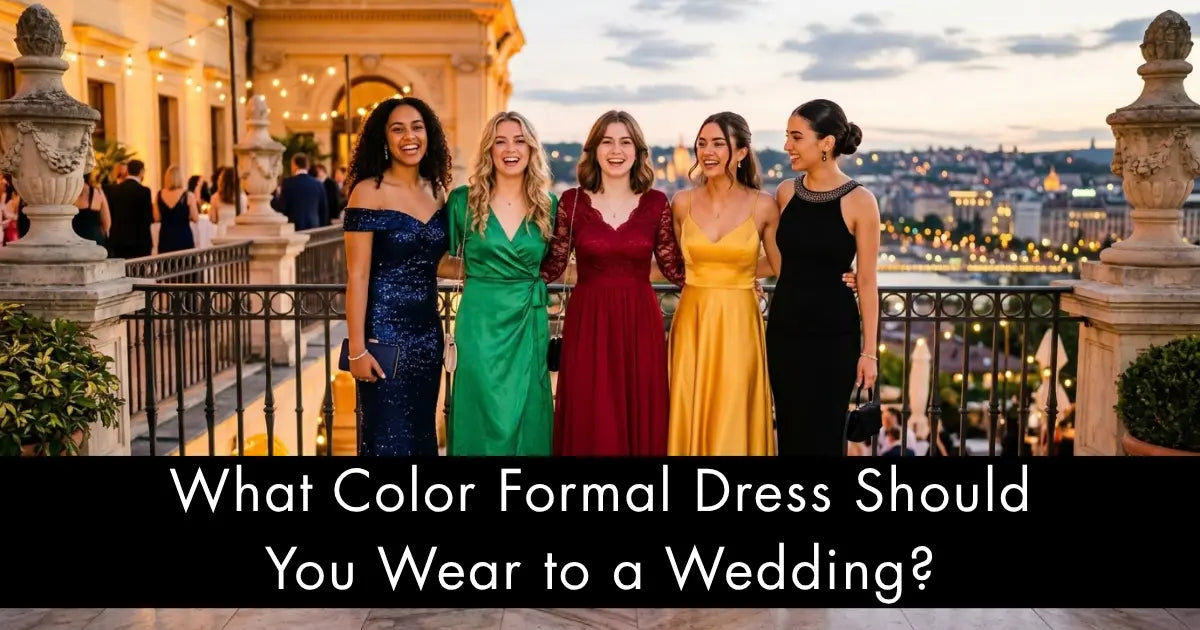
What Color Formal Dress Should You Wear to a Wedding?
The best color formal dress to wear to a wedding depends on the dress code, time of day, season, venue, and the couple's preferences. In most cases, rich colors such as navy, emerald green, burgundy, plum, dusty blue, and deep rose are safe choices for a formal wedding. Softer shades such as sage, lavender, blush, and dusty blue can work well for daytime or spring and summer weddings.
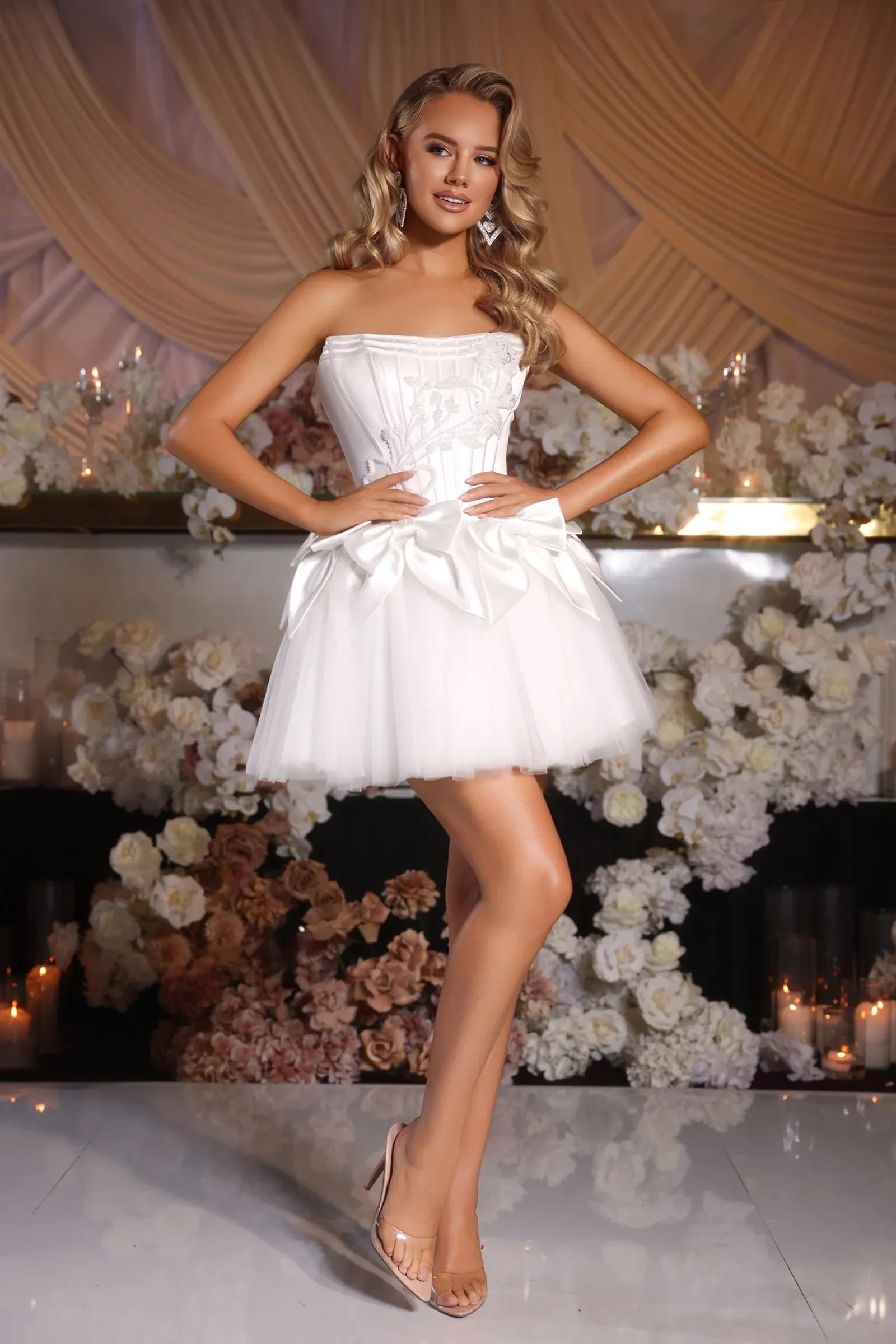
The most important rule is to check the wedding invitation before choosing your dress. The invitation usually gives the clearest clue about how formal your outfit should be. You should also avoid white, ivory, cream, or other shades that could look similar to the bride's dress unless the couple specifically says they are acceptable.
Once you know the dress code, choosing the right color becomes much easier. Your goal is to look polished and wedding-appropriate while still choosing a shade that suits the season, setting, and your personal style.
How Do You Choose the Right Color for a Formal Wedding Dress?
Start with the wedding details rather than choosing a color based only on what looks good in a store or online.
The invitation, wedding website, venue, time, and season can all help you narrow down your options. A dark emerald gown may look perfect for an evening ballroom wedding but feel too heavy for a bright summer garden ceremony. On the other hand, a pale pastel dress that works beautifully for a daytime outdoor wedding may not have enough visual weight for a formal evening celebration.
Think about these factors before buying your dress:
- Dress code: Black tie usually calls for a more formal look than cocktail attire.
- Time of day: Evening weddings generally support deeper and richer colors.
- Season: Spring and summer often work well with lighter shades, while fall and winter suit deeper tones.
- Venue: A ballroom, garden, beach, hotel, or religious venue can influence the appropriate style.
- Wedding colors: Avoid matching the bridal party if the couple has asked guests not to.
- Cultural or religious expectations: Some weddings have specific requirements for clothing, coverage, or colors.
There is no universal wedding guest color chart that says one shade is always correct. The right color depends on the specific wedding.
What Are the Best Formal Dress Colors for a Wedding?
Several colors work particularly well for formal wedding guest dresses. The best choice depends on the atmosphere you want and the time and season of the celebration.
Navy Blue Formal Dresses
Navy is one of the easiest colors to wear to a formal wedding. It looks polished without being as severe as some very dark shades.
A navy formal dress can work for daytime or evening weddings, making it a practical choice if you are unsure about the exact tone to choose. Satin, chiffon, crepe, velvet, and other dressy fabrics can all work with navy.
For an evening wedding, pair navy with metallic accessories, elegant heels, and simple jewelry. For daytime events, softer accessories can make the look feel lighter.
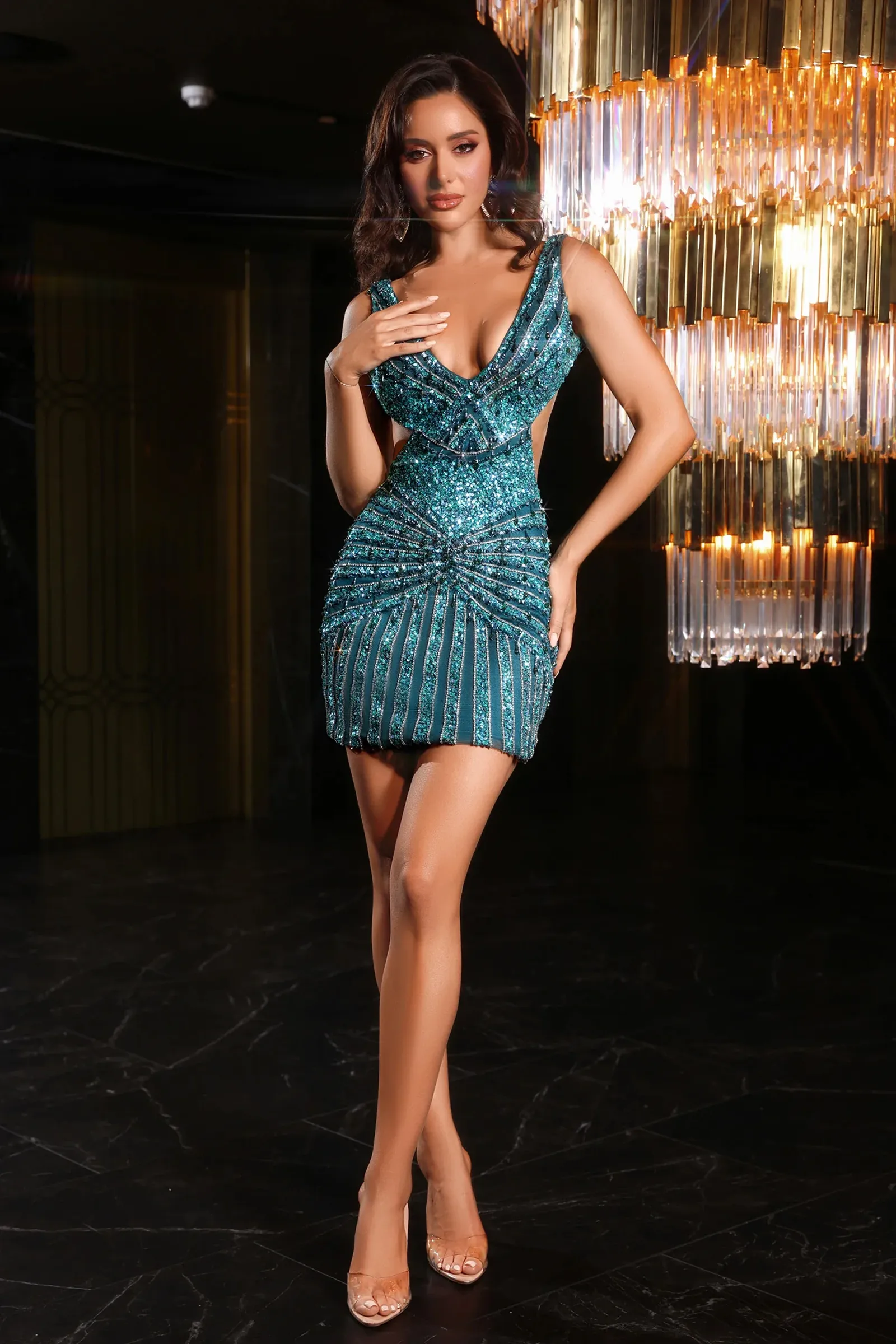
Emerald Green Formal Dresses
Emerald green gives a formal dress a rich and elegant appearance without looking too similar to traditional bridal shades.
It works particularly well for evening weddings, fall celebrations, and formal indoor venues. An emerald gown in satin or velvet can create a dressier appearance, while chiffon or another lightweight fabric can make the color feel softer.
If the wedding has a green bridal-party color, however, check the invitation or wedding website before choosing this shade.
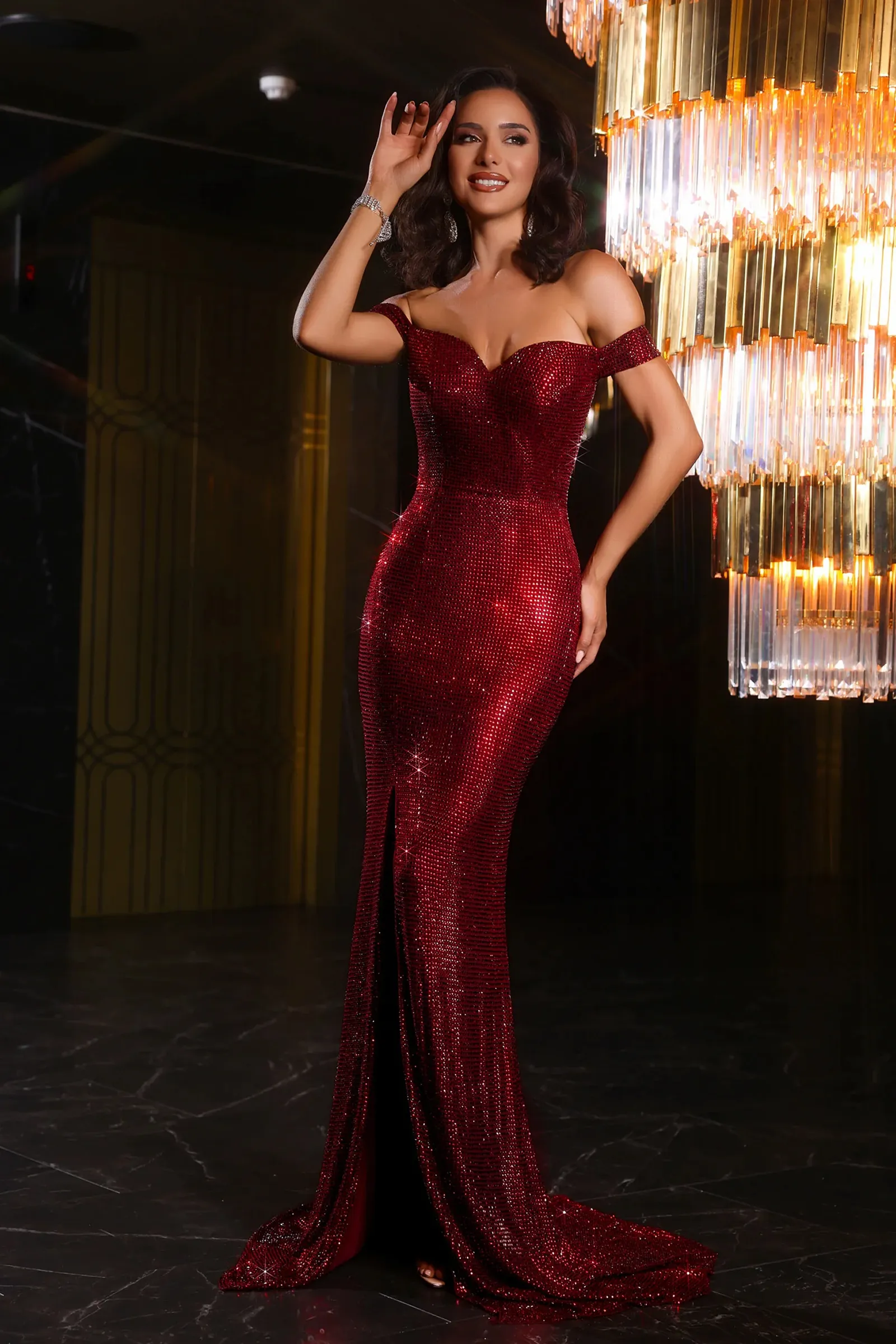
Burgundy and Wine
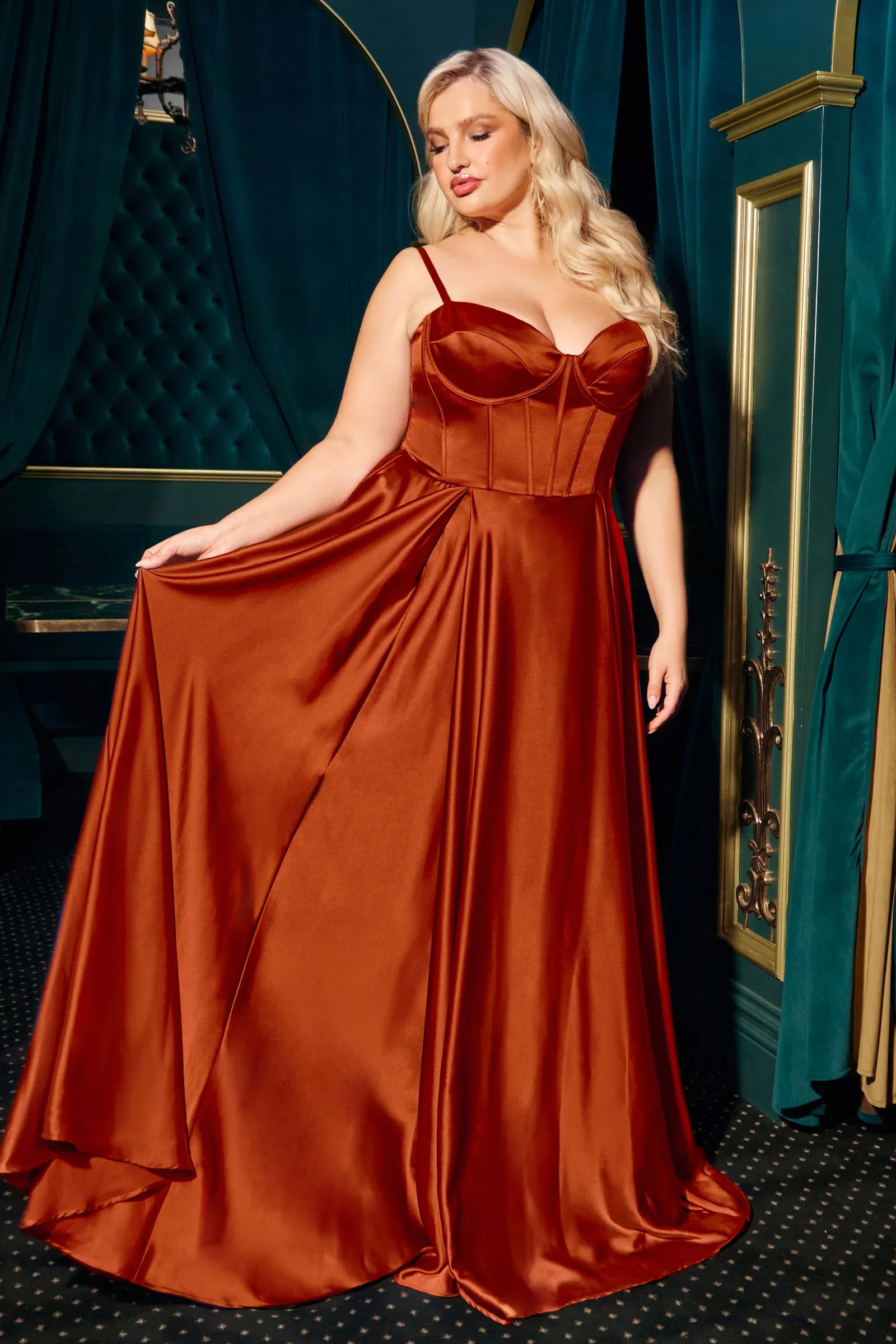
Burgundy, wine, and deep red are strong options for fall and winter weddings. These shades have enough depth to suit formal evening events while still adding color to your outfit.
They are especially useful when you want something more noticeable than navy or black without choosing a very bright color.
For a formal wedding, a solid burgundy gown can look sophisticated with minimal accessories. Gold, silver, nude, or black accessories can all work depending on the dress and overall styling.
Plum and Deep Purple
Plum, aubergine, and deep purple are another group of colors that can work well for formal weddings.
These shades are particularly suitable for evening events and cooler seasons. They also offer an alternative if you like dark colors but do not want to wear black.
A floor-length plum dress can look formal without needing heavy embellishment. If the dress already has sequins, beading, lace, or another noticeable detail, keep accessories relatively simple.
Dusty Blue and Soft Blue
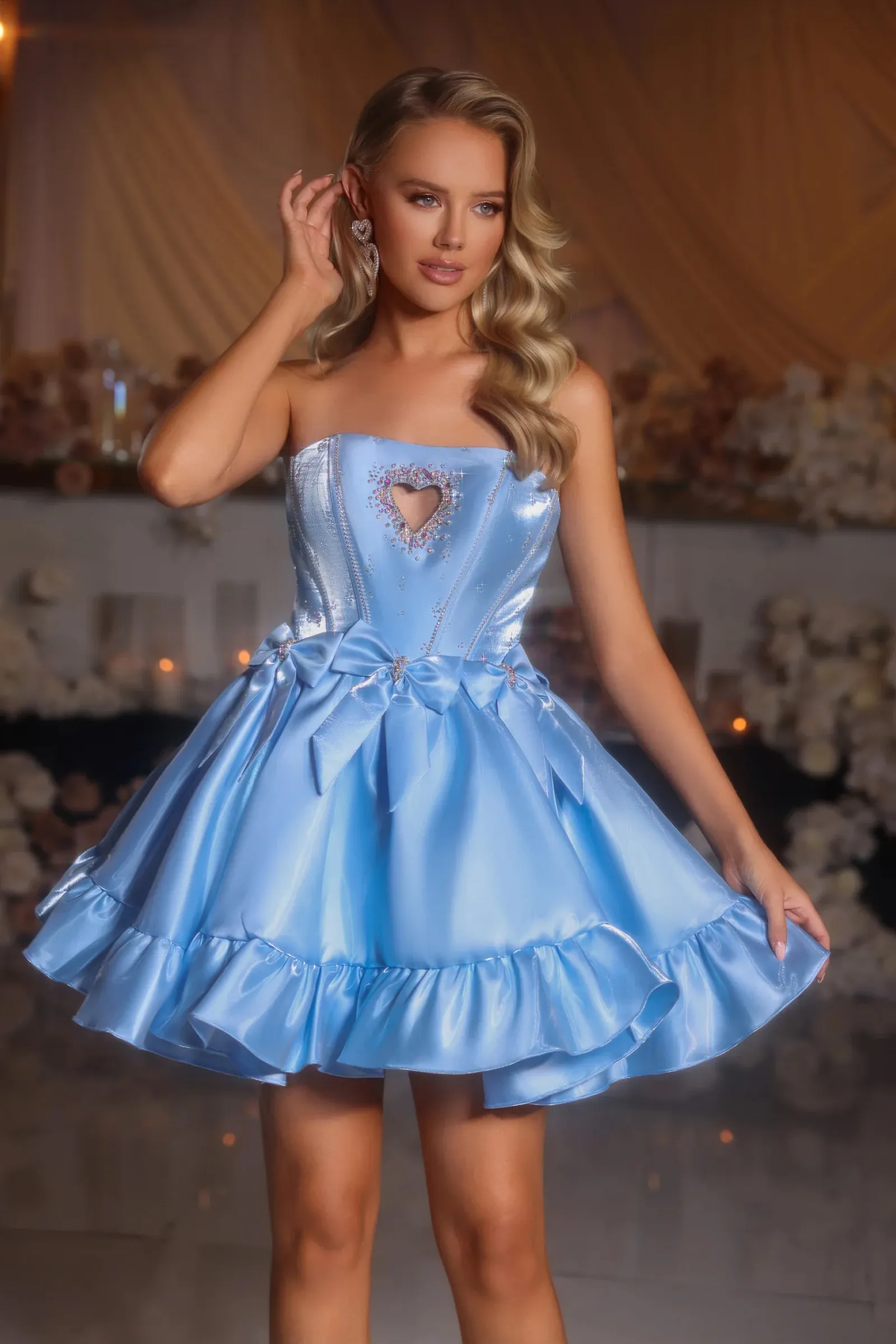
Blue does not have to mean navy. Dusty blue, powder blue, slate blue, and other muted blue shades can work beautifully for daytime weddings.
They are especially suitable for spring and summer celebrations. Lighter blue can also work well for outdoor venues where very dark colors may feel too heavy.
For a formal wedding, pay attention to the fabric and construction. A soft blue floor-length gown in chiffon, satin, or another dressy material will generally look more formal than a casual cotton dress in the same color.
Blush and Dusty Rose
Blush, dusty rose, mauve, and muted pink can be excellent choices for spring and summer weddings.
However, be careful with extremely pale blush shades. Under certain lighting, some very light pink dresses can appear almost white. If the bride has requested that guests avoid colors close to white, choose a more noticeable pink or rose shade.
Red Formal Dresses
Red is one of the most common questions guests have, and the answer is straightforward: yes, you can wear red to a wedding in the US.
A deep, saturated red such as ruby or true red reads as bold and festive, not bridal. It works well for evening weddings and fall celebrations. Bright or orange-toned reds can be harder to style formally, so look for a shade that leans cooler and deeper rather than loud or primary.
Avoid red only if the couple has asked guests not to wear it, if you know it is a bridal color at a cultural ceremony (see the section on cultural weddings below), or if the bridesmaid dresses are red and you would blend in with the wedding party.
A red gown in a dressy fabric such as satin, velvet, or crepe can look sophisticated at a formal or black-tie wedding. Keep accessories simple and let the color stand on its own.
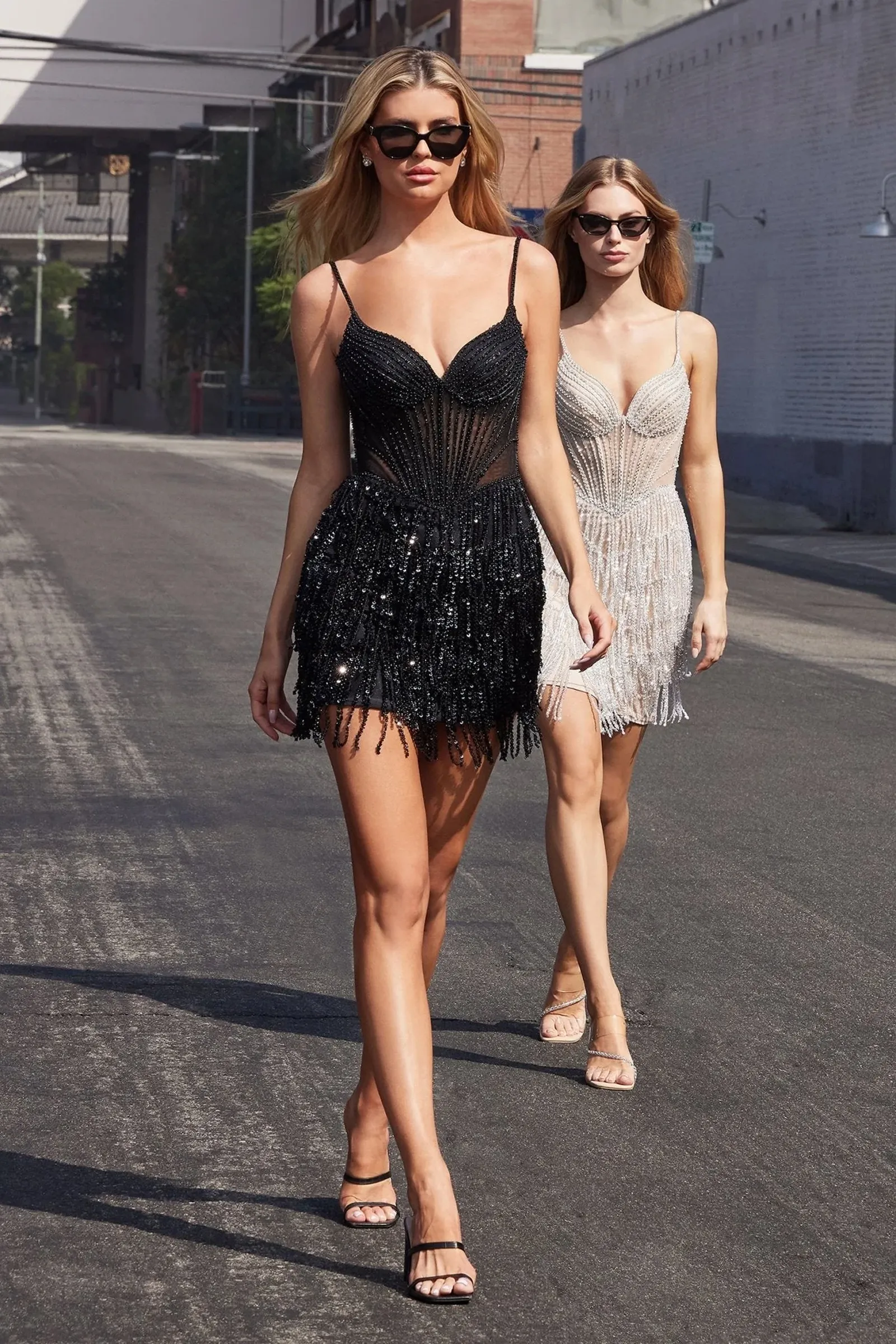
Metallic Formal Dresses
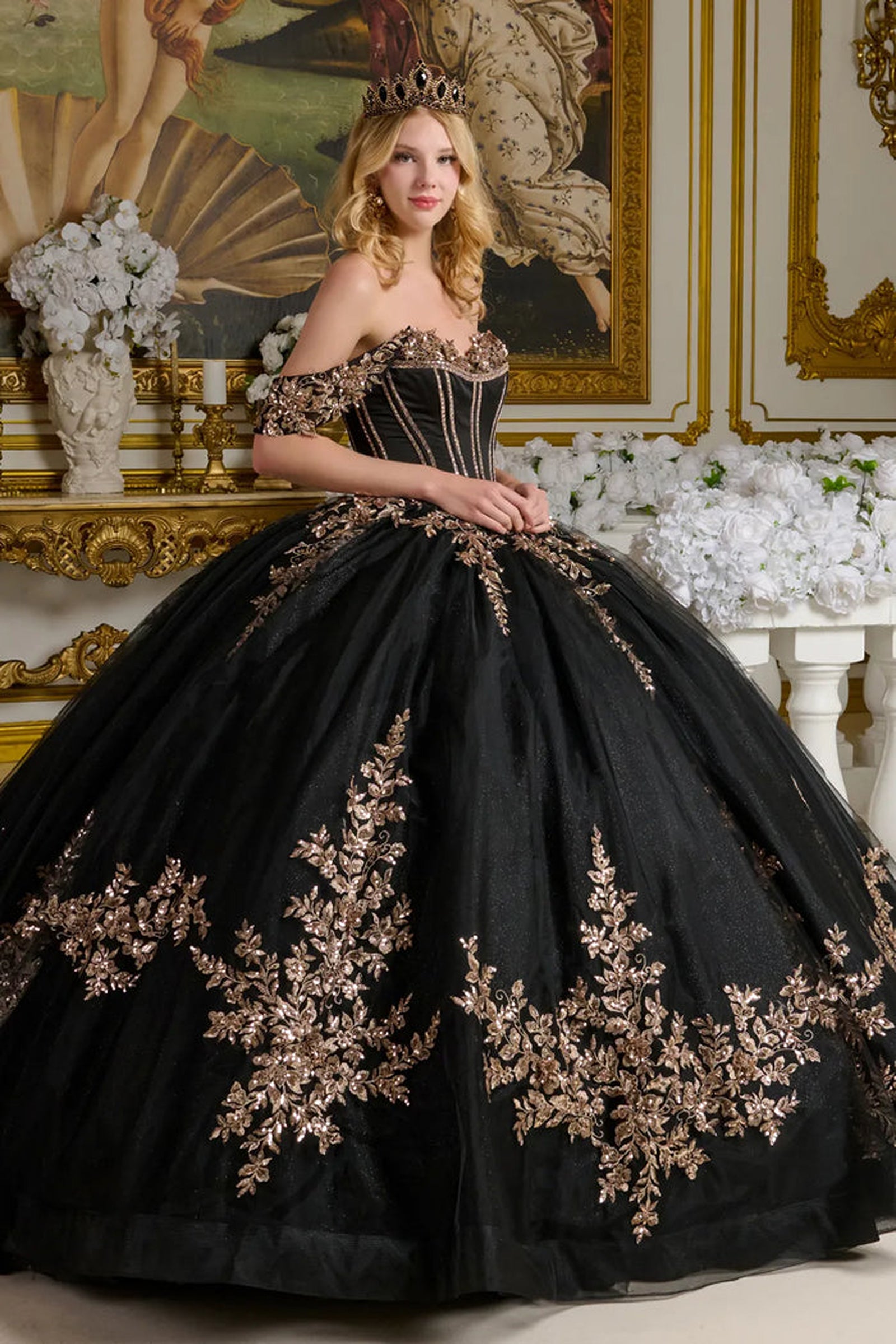
Gold, silver, and rose gold dresses are a strong option for formal and evening weddings. They photograph well, work across seasons, and naturally suit the formality level of black-tie and black-tie optional events.
Gold tends to work best for fall and winter weddings. Silver is more versatile and suits both warm and cool seasons. Rose gold bridges the two and can work well for spring and summer events.
If you wear a fully metallic dress, keep accessories minimal. A simple clutch, clean shoes, and understated jewelry let the dress do the work without looking overdone.
Avoid metallics for daytime outdoor weddings or very casual settings. A full sequin or metallic gown at a relaxed afternoon garden wedding can feel out of place even if the color itself is not wrong.
Black
Black is often associated with formal dressing, and a black dress can be appropriate for many evening weddings.
However, black is not automatically the right choice for every wedding. Consider the invitation, culture, location, time of day, and couple's preferences.
For a black-tie wedding, a black floor-length gown or elegant formal cocktail dress can fit naturally into the dress code. A simple black dress can also be dressed up with jewelry, shoes, a clutch, or metallic details.
If the couple has requested a specific color palette, follow their instructions instead of relying on general etiquette.
Read More: Best Formal Dresses for Holiday Parties
What Colors Should You Avoid at a Wedding?
The safest color to avoid is white, along with shades that could easily be mistaken for white.
White, Ivory, and Cream
Traditionally, guests avoid white because the color is strongly associated with the bride's wedding dress.
The same principle can apply to ivory, cream, champagne, very pale beige, and extremely light blush when they look white in photographs or under bright lighting.
This does not mean every wedding follows the same rule. Some couples specifically ask guests to wear white or host an all-white wedding. In those situations, the couple's stated dress code takes priority.
If you are unsure, choose another color.
Colors Reserved for the Wedding Party
The bridal party may be wearing a specific color or combination of colors. If you know this in advance, consider choosing a different shade.
For example, if bridesmaids are wearing burgundy, you do not necessarily need to avoid every shade of red. But choosing a dress that looks almost identical to the bridesmaid dresses may make you appear to be part of the wedding party.
When the wedding website lists colors to avoid, follow that guidance.
Extremely Neon and Very Bright Colors
Bright neon shades are not automatically inappropriate, but they can be difficult to style for a formal wedding.
A formal dress usually benefits from a polished color and fabric combination. If you want something bright, consider a saturated jewel tone instead of a fluorescent shade.
The same applies to very bright primary colors. A clear, loud yellow or an electric orange can look casual or out of place at a formal event. If you want yellow, lean toward a muted gold or soft mustard. If you want orange, consider a deeper rust or terracotta instead.
For a formal wedding, colors that are strong but not distracting tend to look better than anything that immediately pulls attention away from the couple.
What About Jumpsuits and Pantsuits?
A dress is not the only option for a formal wedding. Jumpsuits, wide-leg trousers with a formal blouse or blazer, and tailored pantsuits are all acceptable at most US weddings today.
For a black-tie or formal event, the same rules that apply to dress color and fabric also apply to these alternatives. A wide-leg satin jumpsuit in navy or emerald can look just as formal as a floor-length gown. A tailored pantsuit in a deep jewel tone can also work well, especially if the venue is indoors.
What matters is that the outfit is clearly dressy. Casual cuts, cotton fabrics, or pieces that look more like office wear than formal attire will not work regardless of the color.
If the invitation says black tie, lean toward gown-length options or a very formal jumpsuit rather than a suit.
What Color Formal Dress Should You Wear to a Daytime Wedding?
Daytime weddings usually allow more flexibility with color.
For a formal daytime wedding, consider colors such as:
- Dusty blue
- Sage green
- Lavender
- Soft pink
- Rose
- Medium blue
- Terracotta
- Muted yellow
- Light jewel tones
The season also matters. Spring weddings often work well with soft floral shades and pastels, while summer weddings can support brighter colors and lighter fabrics.
A daytime formal dress does not need to be dark to look elegant. The level of formality comes from the overall outfit, including the dress silhouette, fabric, shoes, accessories, and finishing details.
For example, a floor-length lavender gown in a dressy fabric can look more formal than a short black cotton dress.
What Color Formal Dress Should You Wear to an Evening Wedding?
Evening weddings generally give you more room to wear deep, rich colors.
Navy, emerald, burgundy, plum, black, deep teal, sapphire, dark rose, red, and metallic shades are all worth considering.
If the invitation says black tie, the dress should also meet the formality level. A floor-length evening gown is a traditional option, although a sophisticated formal cocktail dress can also work depending on the specific event.
For evening weddings, fabrics such as satin and velvet can add a dressier appearance. However, color alone does not determine whether a dress is formal.
A casual silhouette in a dark color can still look too casual for a black-tie wedding.
What Colors Work Best for Formal Weddings by Season?
Seasonal color choices are useful when the invitation does not provide a specific palette.
Spring Wedding Colors
Spring is a good time for lighter and fresher colors. Consider lavender, dusty blue, sage, blush, soft pink, rose, and light green.
Floral prints can also work when they suit the dress code. For a formal event, choose a sophisticated print and dressy fabric rather than a casual sundress.
Summer Wedding Colors
Summer weddings allow plenty of color options. Light blue, coral, pink, green, lilac, yellow, and brighter jewel tones can all work depending on the venue and dress code.
For outdoor weddings, fabric matters as much as color. Lightweight materials can make a long formal dress more comfortable in warm weather.
Fall Wedding Colors
Fall naturally works well with deeper colors such as burgundy, wine, rust, forest green, navy, plum, chocolate brown, and deep teal.
You do not have to limit yourself to traditional fall colors. A jewel-tone dress can also work beautifully for an autumn formal wedding.
Winter Wedding Colors
Winter is ideal for rich and dramatic shades. Navy, emerald, burgundy, plum, black, sapphire, deep red, dark teal, and gold are all strong options.
Metallic details can also work well for evening winter weddings. Silver, gold, and subtle sparkle can add interest without requiring a very bright dress color.
Does the Wedding Dress Code Affect the Color You Should Wear?
Yes. The dress code should come before color when deciding what to wear.
For black tie, formal evening gowns and dressy cocktail dresses are common options. Darker and richer colors often work naturally, but black is not the only acceptable choice.
For formal or black-tie optional, you have somewhat more flexibility. Floor-length dresses, elegant cocktail dresses, and dressy separates can all be appropriate depending on the invitation.
For cocktail attire, a midi or knee-length dress can work, and you have more freedom with colors, prints, and styling.
For semi-formal, the outfit can be less formal than black tie. Daytime and evening timing can make a difference, so read the invitation carefully.
The key point is that a formal color does not automatically make an outfit formal. A navy mini dress and a navy floor-length gown may be the same color but communicate very different levels of formality.
How Should You Choose a Dress Color Based on Your Skin Tone?
Skin tone can be useful when narrowing down your choices, but there is no strict color rule you need to follow.
If you have a warm undertone, you may enjoy colors such as:
- Emerald
- Olive
- Warm rose
- Coral
- Rust
- Burgundy
- Gold-toned shades
If you have a cool undertone, colors such as these may work well:
- Sapphire
- Navy
- Lavender
- Plum
- Berry
- Dusty blue
- Cool pink
If your undertone is neutral, you can often wear both warm and cool colors comfortably.
The best test is simple: hold the dress near your face in natural light. Look at how your skin, eyes, and overall complexion appear next to the fabric. If the color makes you look dull or washed out, try another shade.
What If You Are Attending a Cultural Wedding?
Many weddings in the US follow traditions from other cultures, and color expectations can be very different.
At South Asian weddings, including Indian, Pakistani, and Bangladeshi ceremonies, red is traditionally a bridal color. Wearing red as a guest at these events is generally considered inappropriate. Bright warm pinks and oranges can sometimes overlap with bridal palettes as well. If you are attending a South Asian wedding and are unsure, lean toward jewel tones such as teal, royal blue, emerald, or purple.
At some East Asian weddings, white is associated with mourning rather than celebration. If you are attending a traditional Chinese or Korean wedding ceremony, it is worth checking before wearing all-white or heavily white-toned outfits.
If you have any doubt about color expectations at a cultural wedding, ask the couple or a family member before choosing your outfit. Most people will appreciate the consideration.
Should You Match the Wedding Color Palette?
You do not normally need to match the wedding color palette unless the couple specifically asks guests to do so.
In fact, matching the bridesmaids too closely can make your outfit look like part of the wedding party. If the couple has published a list of colors to avoid, use it as your guide.
If you only know the main wedding colors, you can choose a complementary shade instead.
For example, if the wedding uses dusty blue and white, you could consider navy, mauve, sage, lavender, or a deeper blue rather than wearing the exact bridesmaid shade.
The invitation and wedding website should always take priority over general color advice.
Should You Ask the Couple?
Yes, and most couples will appreciate it.
If the invitation or wedding website does not give clear guidance and you are unsure about a specific color choice, it is completely fine to send the couple a short message. Keep it simple and easy to answer.
You do not need to ask permission for a standard choice like navy or sage. But if you are considering something that could be tricky, such as red at a South Asian ceremony, a very pale blush that could read as white, or a color that you think might match the bridal party, it is worth a quick check.
If reaching the couple directly feels awkward, ask a member of the wedding party or another guest who might know more about the expectations.
Can You Wear a Patterned Formal Dress to a Wedding?
Yes, a patterned dress can be appropriate for a formal wedding when the pattern and dress design suit the event.
Florals can work particularly well for spring and summer weddings. Dark floral prints can work for fall or evening events. Subtle geometric patterns can also look polished when paired with a formal silhouette.
For a black-tie wedding, however, a solid-colored gown often provides a more traditional evening appearance.
If you choose a patterned dress, avoid combining it with too many competing accessories. Let the dress remain the main part of the outfit.
How Do You Make a Formal Dress Look More Elegant?
Color is only one part of the final outfit. The fabric, fit, length, shoes, jewelry, bag, and hairstyle all affect how formal the dress appears.
Choose the Right Silhouette
The silhouette of a dress affects how formal it reads, sometimes more than the color does.
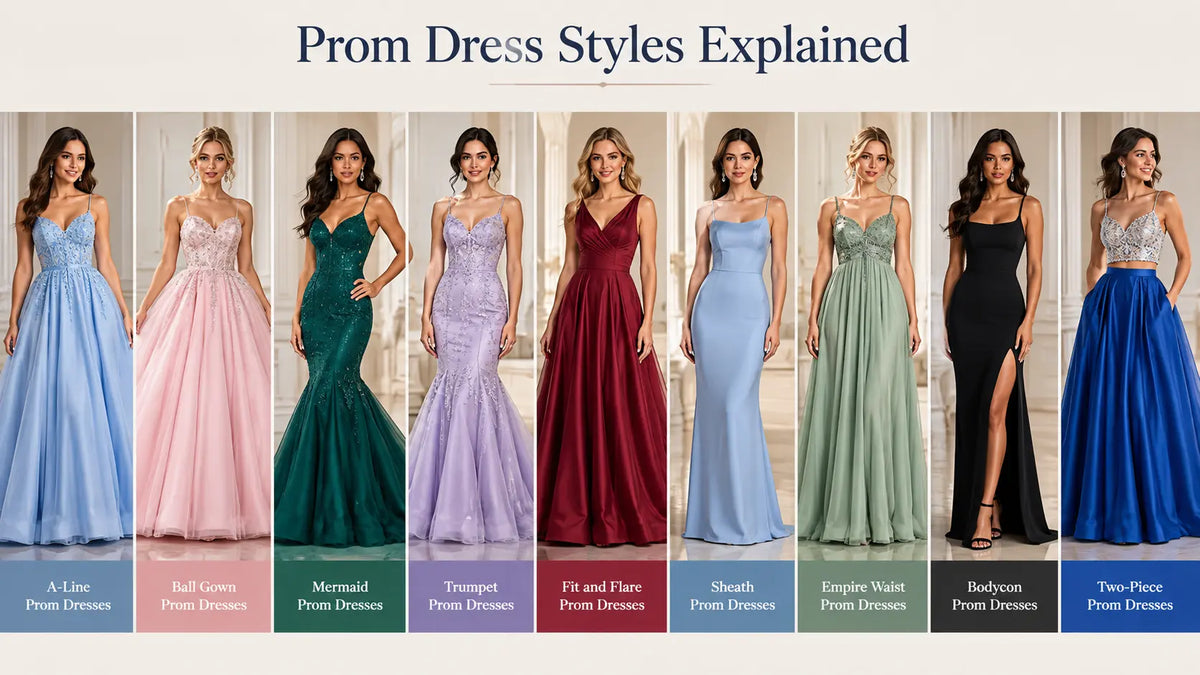
A-line gowns, column or sheath dresses, and ballgowns are all silhouettes that read as formal at floor length. A fit-and-flare shape can also work well. These styles have structure and weight that suit black-tie and formal dress codes.
Short, bodycon, wrap, and tiered casual styles tend to read as less formal even in the same fabric and color. For a formal wedding, choose a silhouette that has a clear evening or gown-like shape.
Length also matters. At a black-tie event, floor-length is the standard. Midi and knee-length options can work for cocktail and semi-formal dress codes but may fall short at a strictly formal event.
Focus on Fit, Fabric, and Accessories
A simple dress can look sophisticated when it fits properly and is paired with appropriate accessories. Likewise, an expensive or heavily decorated dress can look out of place if the style does not match the wedding.
For a formal wedding, focus on:
- A polished fit
- Dressy fabric
- Appropriate length
- Elegant shoes
- Simple, coordinated accessories
- A clutch or small evening bag
- Jewelry that works with the neckline
- Groomed hair and makeup
Avoid adding accessories simply because you feel the outfit needs more detail. If the dress already includes sequins, beading, lace, embroidery, or a strong print, understated accessories may create a better balance.
What Accessories Work With Each Color?
Accessories can make or break a formal look. Here is a quick guide for the most common dress colors:
- Navy: Gold or silver both work. Nude or metallic heels. Simple earrings or a pendant necklace.
- Emerald green: Gold accessories work best. Nude or gold heels. Minimal jewelry so the color stands out.
- Burgundy or wine: Gold jewelry, nude or black heels. A simple clutch in black, gold, or nude.
- Plum or deep purple: Silver or gold. Nude or black heels. Avoid competing colors in jewelry.
- Dusty blue: Silver works well. Nude or metallic heels. Soft or minimal jewelry.
- Blush or dusty rose: Rose gold, gold, or silver. Nude heels. Keep jewelry delicate.
- Red: Gold or silver. Black, nude, or metallic heels. Simple jewelry — the dress already has impact.
- Metallic (gold or silver): Match your accessories to the dress tone. Minimal jewelry. Clean heels in the same metallic or nude.
- Black: Gold, silver, or statement jewelry all work. Almost any heel color. Most flexible dress color for accessories.
When in doubt, nude heels work with nearly every color. A small clutch in black, gold, or nude keeps things clean without competing with the dress.
What Is the Safest Formal Dress Color If You Are Unsure?
If you have limited information about the wedding, navy is one of the easiest colors to consider because it can work across many seasons, times, and levels of formality.
Emerald, burgundy, plum, deep blue, and other rich shades are also useful choices for formal evening weddings.
For daytime celebrations, dusty blue, sage, rose, lavender, and other softer colors can be easier to work with.
Still, the safest approach is not simply picking one universal color. Check the invitation first, look for a wedding website or dress code instructions, and avoid bridal shades unless the couple says otherwise.
Also Read: Prom Dress Styles Explained
A Simple Wedding Guest Color Checklist
Before ordering your formal dress, ask yourself five questions:
-
What is the dress code?
Black tie, formal, cocktail, and semi-formal events require different levels of dressiness. -
Is the wedding during the day or evening?
Lighter shades often work well during the day, while richer colors naturally suit evening events. -
What season is it?
Seasonal colors can help your outfit feel appropriate for the setting. -
Could the color look bridal?
Avoid white, ivory, cream, and very pale shades unless the couple has approved them. -
Is the color reserved for the wedding party?
If the couple has listed colors to avoid, follow those instructions.
Answering these questions will usually narrow your choices quickly.
Frequently Asked Questions
Can I wear red to a wedding?
Yes. In the US, red is not a bridal color and is generally fine to wear as a guest. Deeper reds such as ruby or wine read as more formal than bright primary reds. Avoid red only if the couple has specifically asked guests not to wear it, or if it is a South Asian wedding where red is traditionally reserved for the bride.
Can I wear black to a daytime wedding?
You can, but it depends on the dress code and setting. Black at an evening wedding is completely standard. At a casual or outdoor daytime wedding, all-black can feel heavy. If the invitation says formal or cocktail attire, black works fine at any time of day.
Can I wear a jumpsuit or pantsuit to a formal wedding?
Yes. A tailored jumpsuit or pantsuit in a dressy fabric such as satin, crepe, or velvet is acceptable at most formal and cocktail-attire weddings. For black tie, choose a floor-length or very polished option. Avoid casual cuts or everyday office fabrics.
What if I accidentally match a bridesmaid?
If you notice before the wedding and have time to change, swap to a different shade. If you only find out when you arrive, do not stress. A small difference in shade, fabric, or silhouette will be obvious enough in person and in photos.
Is it okay to wear floral to a formal wedding?
Yes, when the print is sophisticated and the dress is clearly formal. A dark floral in a floor-length gown works for fall and evening weddings. A bright, busy floral in a casual silhouette is harder to make work. Let the dress construction and fabric guide you as much as the print.
What if I do not know the dress code?
Check the invitation for any language that signals formality. Then look at the venue, time, and any wedding website. If you are still unsure, a knee-to-midi length dress in a solid jewel tone is a safe middle ground for most situations. When in doubt, it is better to be slightly overdressed than underdressed at a wedding.
What should I avoid at a South Asian wedding?
Avoid red, which is typically reserved for the bride. Very pale shades close to white should also be avoided. Jewel tones such as teal, royal blue, deep green, and purple are usually safe and appropriate. When in doubt, ask the couple or a family member.
Find a Formal Dress Color That Fits the Wedding
Choosing what color formal dress to wear to a wedding does not have to be complicated. Start with the invitation and dress code, then consider the time, season, venue, and any colors the couple has asked guests to avoid. Navy, emerald, burgundy, plum, dusty blue, rose, red, metallic, and other polished shades can all work when they match the event.
Most importantly, choose a dress that meets the wedding's level of formality rather than focusing only on the color. A well-fitted dress in the right fabric and silhouette will usually look more appropriate than simply choosing a traditionally formal shade.
If you are looking for formal wedding guest dresses in a range of colors, styles, and lengths, Formal Dress Shops offers options to help you find a dress that fits the occasion and your personal style.


Leave a comment
This site is protected by hCaptcha and the hCaptcha Privacy Policy and Terms of Service apply.