


Prom Dress Styles Explained: A-Line, Mermaid, Ball Gown and More
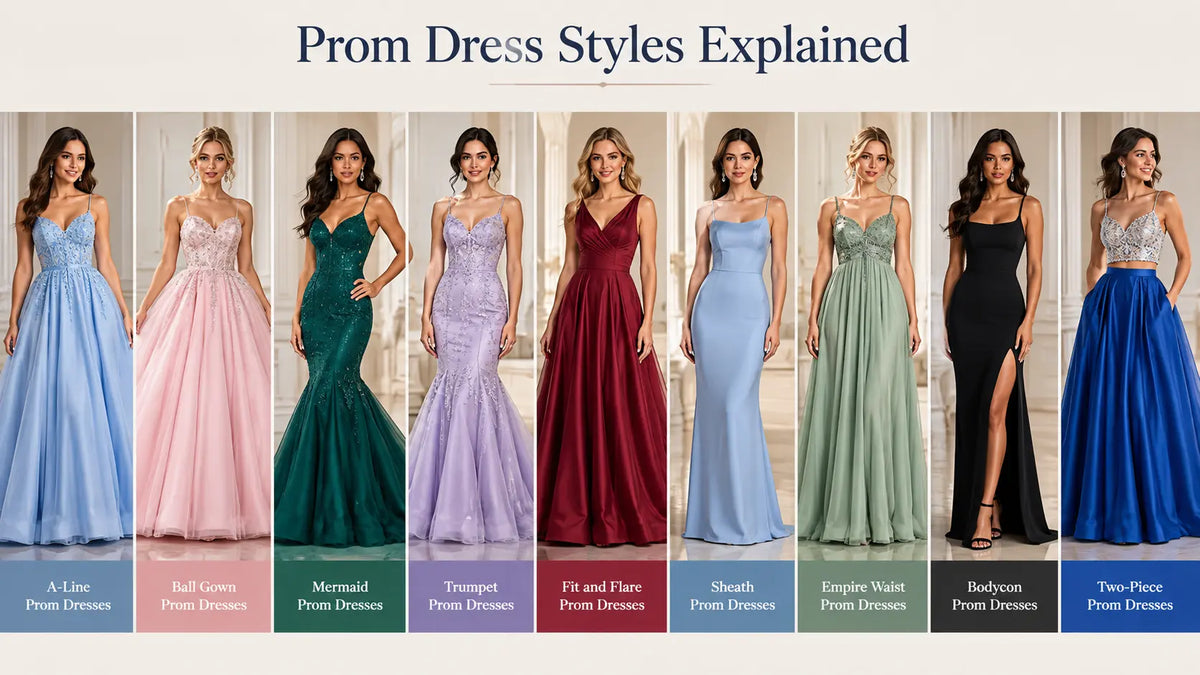
The most common prom dress styles are A-line, mermaid, ball gown, fit and flare, and bodycon. Each style refers to the silhouette of the dress, which describes how it fits through the top and how it falls at the bottom. Beyond the silhouette, prom dresses are also defined by their neckline and details, which include corset backs, off the shoulder straps, open backs, side slits, and one-shoulder cuts. Choosing the right combination of silhouette and style is the most important decision you will make when shopping for a prom dress.
Most people start shopping for prom by looking at colors or fabrics, but the silhouette comes first. A dress that fits your body shape and feels comfortable to wear will always look better than one that doesn't, regardless of how beautiful the fabric or color is.
This guide breaks down every major prom dress style, explains what makes each one different, and helps you figure out which one is the right fit for you.
Why the Dress Silhouette Matters
The silhouette of a prom dress determines how it fits, how it moves, and how it looks in photos. Two dresses in the same color and fabric can look completely different based on the silhouette alone.
Beyond appearance, silhouette also affects comfort. Some styles like ball gowns and A-lines give you freedom to move and dance freely. Others like mermaid and bodycon dresses are fitted through the leg and need a different kind of confidence and movement. Knowing what each style looks like, and what wearing it actually feels like, helps you shop with a clear picture in mind instead of guessing in the fitting room.
Prom Dress Silhouettes at a Glance
Before going into each style in detail, here is a quick comparison to help you narrow things down.
| Silhouette | How It Fits | Movement | Best For | Venue |
|---|---|---|---|---|
| A-Line | Fitted waist, flares gradually | Easy | All body types | Any |
| Ball Gown | Fitted bodice, very full skirt | Moderate | Drama and volume | Ballroom, hotel |
| Mermaid | Tight through hips, flares below knee | Restricted | Curves, hourglass | Indoor, evening |
| Trumpet | Tight through hips, flares from mid-thigh | Moderate | Curves with more movement | Indoor, evening |
| Fit and Flare | Fitted to knee, flares from there | Good | Curves with comfort | Any |
| Sheath | Straight and slim, no flare | Easy | Petite, athletic, minimalist | Any |
| Empire Waist | Fitted under bust, flows from there | Very easy | All body types, comfort priority | Outdoor, garden |
| Bodycon | Tight top to hem, no flare | Restricted | Bold, confident looks | Less formal prom |
| Two-Piece | Crop top and separate skirt | Varies by skirt | Creative, trend-forward | Any |
Prom Dress Silhouettes Explained
A-Line Prom Dresses
An A-line dress fits at the waist and then flares out gradually toward the floor, creating a shape that looks like the letter A. The skirt is not as full as a ball gown but still has enough volume to feel formal and elegant.
A-line prom dresses are one of the most popular choices for good reason. They are flattering on almost every body type because they define the waist while giving the hips and legs room to breathe. The silhouette is classic enough to never look dated, which means it also photographs well at any angle.
If you want to look polished and put together without worrying about whether you can sit, dance, or move freely, an A-line dress is the most practical formal choice. The style works equally well in simple fabrics like satin and in embellished fabrics like lace or beaded chiffon.
Ball Gown Prom Dresses
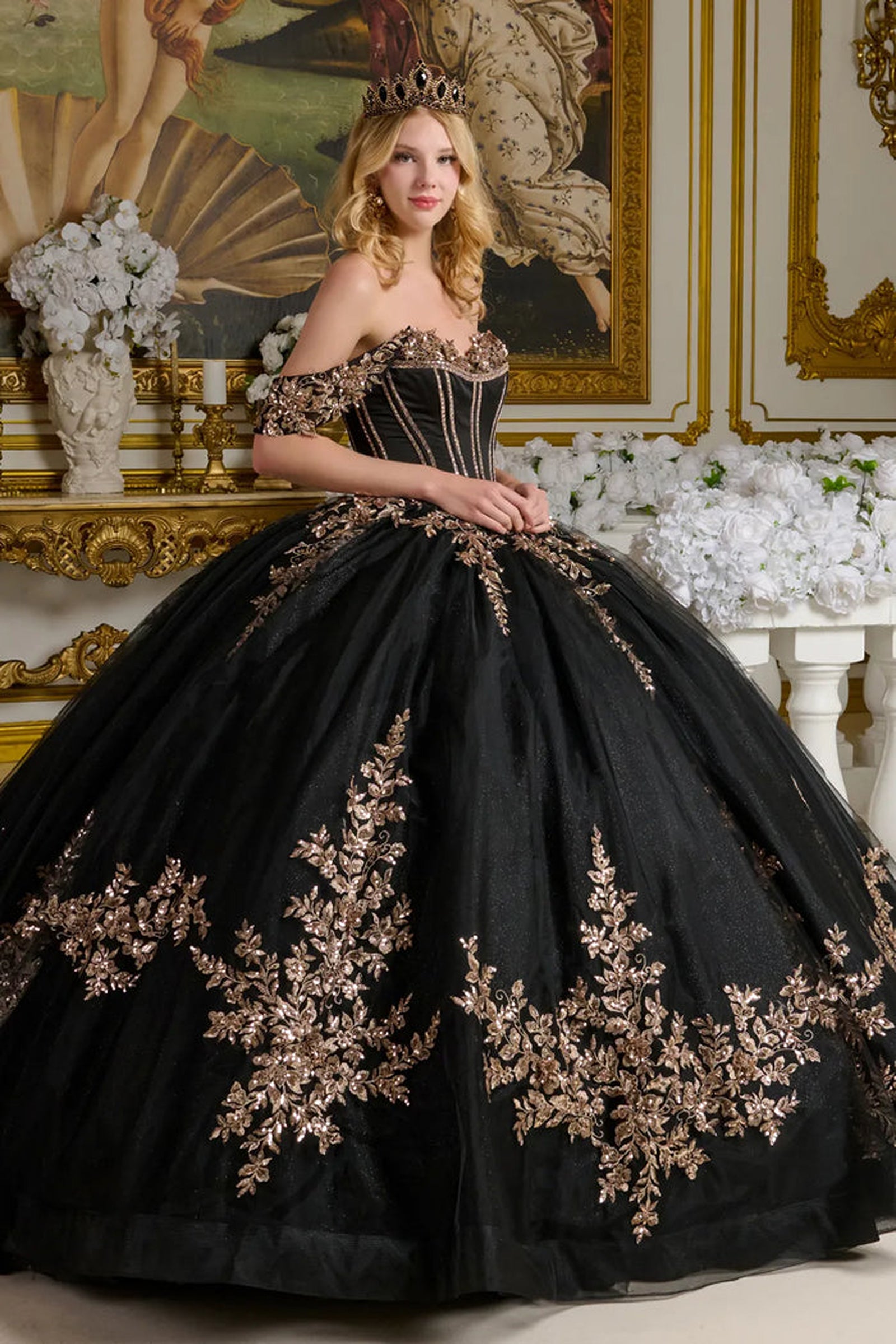
A ball gown has a fitted bodice and a very full, floor-length skirt. The skirt often has layers of tulle or structured fabric underneath to create its volume. Ball gowns are the most formal of all prom dress silhouettes and give the strongest princess effect.
Ball gown prom dresses work best for grand venues and more formal prom settings. They make a powerful entrance and photograph dramatically, but they do take some adjustment to wear comfortably. Sitting and moving through crowded spaces requires a little more effort. If the venue is spacious and you want the most dramatic silhouette available, a ball gown delivers.
Read More: Ball Gown Dress Trends for 2026
Mermaid Prom Dresses
A mermaid dress is fitted through the bodice, waist, hips, and thighs, and then flares out below the knee into a skirt that resembles a mermaid tail. The dramatic contrast between the tight upper section and the flared lower section is what defines this style.
Mermaid prom dresses are best suited for women who are comfortable in a fitted silhouette. They highlight the curves of the waist and hips more than any other style. The fit also means that movement is more restricted, so walking up stairs or dancing in a mermaid dress takes some practice.
For women who want a glamorous, high-fashion look and are comfortable in a fitted dress, the mermaid silhouette is one of the most striking options available.
Trumpet Prom Dresses
A trumpet dress looks very similar to a mermaid, with one key difference. It begins to flare from a higher point on the thigh rather than at or below the knee. The result is a dress that still shows off the curves of the waist and hips but gives you noticeably more room to move.
If you love the fitted, glamorous look of a mermaid but found it too tight to walk or dance in comfortably, the trumpet silhouette is the better option. You get the same red-carpet appearance with better mobility.
Read More: Trumpet vs Mermaid Prom Dresses: What's the Difference
Fit and Flare Prom Dresses
A fit and flare dress is similar to a mermaid but the skirt begins to flare from a higher point, usually at or just below the knee rather than mid-thigh. This makes fit and flare dresses easier to move in than a true mermaid while still creating a shaped, flattering silhouette.
Fit and flare prom dresses are a great middle ground. They give you the fitted waist and hip definition of a mermaid dress but with noticeably more freedom to walk and dance. For women who love the idea of a fitted dress but want more comfort, fit and flare is the better choice.
Sheath Prom Dresses
A sheath dress follows the natural line of the body from the neckline down to the hem without flaring at any point. The silhouette is straight and slim, and the dress relies entirely on the fabric and the fit to create impact.
Sheath prom dresses work well for taller and more athletic body types. They create a clean, modern look that feels more editorial than traditional prom. Simple details like a high slit, an open back, or a bold neckline stand out more clearly on a sheath silhouette because there is nothing else competing with them.
If you want a grown-up, minimalist look that is very easy to move in and photographs cleanly, the sheath is worth trying on.
Empire Waist Prom Dresses
An empire waist dress has a fitted section that sits just under the bust, with the rest of the skirt flowing loosely to the floor from that point. It does not define the natural waist at all. The structure comes entirely from the bodice above the bust seam.
This silhouette is one of the most comfortable options for all-night wear. It is forgiving around the midsection, works well in lightweight fabrics like chiffon and tulle, and suits anyone who wants a soft, romantic look without a tight fit. Empire waist styles are particularly popular for outdoor and garden-themed prom settings.
Bodycon Prom Dresses
A bodycon dress fits closely to the body from the shoulder to the hem with no flare. The silhouette is sleek and linear. Bodycon prom dresses are usually shorter, falling at or above the knee, though floor-length bodycon options do exist.
Bodycon prom dresses are a bold choice. They work best on women who want a modern, fashion-forward look and feel confident in a close-fitting dress. Because the silhouette does not rely on volume or structure, the fabric and detailing carry the entire visual impact.
Sequin, metallic, and embellished fabrics work particularly well in a bodycon cut.
Two-Piece Prom Dresses
A two-piece prom dress has a separate top and skirt rather than one connected garment. The top is usually a crop top or fitted bustier, and the skirt can be anything from a floor-length ball gown skirt to a fitted midi.
Two-piece prom dresses have become one of the strongest trends in recent years because they let you mix proportions, adjust sizing between top and bottom independently, and create a look that stands out from a room full of gowns. They photograph well and give a more fashion-forward appearance than a traditional gown.
The silhouette you end up with in a two-piece depends entirely on the skirt shape you choose, so apply the same logic from the sections above when picking the bottom.
Prom Dress Lengths
Length affects how formal the dress looks, how easy it is to move in, and whether it suits the venue and theme of your prom.
| Length | Falls At | Formality Level | Best For |
|---|---|---|---|
| Floor-length | The floor | Highest | Traditional proms, ballroom venues |
| Midi | Mid-calf | Mid | Modern, less formal proms |
| Knee-length | At or just above the knee | Mid | Semi-formal events |
| Short / Mini | Upper thigh | Casual formal | Less formal proms, after-parties |
Long Prom Dresses
Long prom dresses are floor-length and remain the most popular choice for traditional prom settings. They photograph beautifully, suit every silhouette, and carry the highest level of formality. If your prom is in a hotel ballroom, a banquet hall, or another formal indoor venue, a long dress is the standard right choice.
Short Prom Dresses
Short prom dresses are easier to dance in, generally less expensive, and better suited for less formal proms or after-parties. If your school's prom has a more relaxed setting such as a rooftop, a restaurant, or an outdoor garden, a short dress can look just as intentional and polished as a long one.
Short does not mean casual. A short dress in a dressy fabric with a strong silhouette can look very formal. The key is the fabric and the fit, not the length alone.
Prom Dress Feature Styles: Necklines and Details
Beyond the silhouette, the specific features of a prom dress shape how it looks and feels. Here is a quick reference before the detailed breakdown below.
| Neckline | Best For | Keep In Mind |
|---|---|---|
| Strapless | Classic, timeless look | Needs strong internal boning |
| Sweetheart | Romantic, most body types | Curves the neckline in a flattering way |
| Corset | Defined waist, adjustable fit | Great support, no bra needed |
| Off the Shoulder | Collarbone definition | Best for narrower shoulders |
| One Shoulder | Asymmetrical, fashion-forward | Visual interest without embellishment |
| V-Neck | Elongates the neck and chest | Works well on fuller busts |
| Halter | Athletic, minimalist look | Back is open or minimal |
| High Neck / Illusion | Coverage, editorial | Pairs best with a simple skirt |
| Open Back | Dramatic reveal at the back | Standard bras not possible |
Strapless Prom Dresses
Strapless is one of the most common necklines for prom. The dress has no straps or fabric over the shoulders, leaving the neckline and collarbone fully visible.
To work well, a strapless dress needs strong internal structure. Look for boning in the bodice or a built-in corset panel that holds the dress in place without relying on straps. If the bodice is not properly structured, the dress will shift throughout the night.
Strapless works on almost every body type and pairs naturally with statement earrings since the shoulders and neck are fully on show.
Sweetheart Neckline
A sweetheart neckline curves upward on each side to create a shape that resembles the top of a heart. It is one of the most feminine and flattering necklines for prom because it frames the chest and draws the eye upward.
Sweetheart necklines work particularly well on fuller busts because the curved shape provides natural support and definition. They are also a strong choice for anyone who wants a romantic look without an overly dramatic neckline.
Corset Prom Dresses
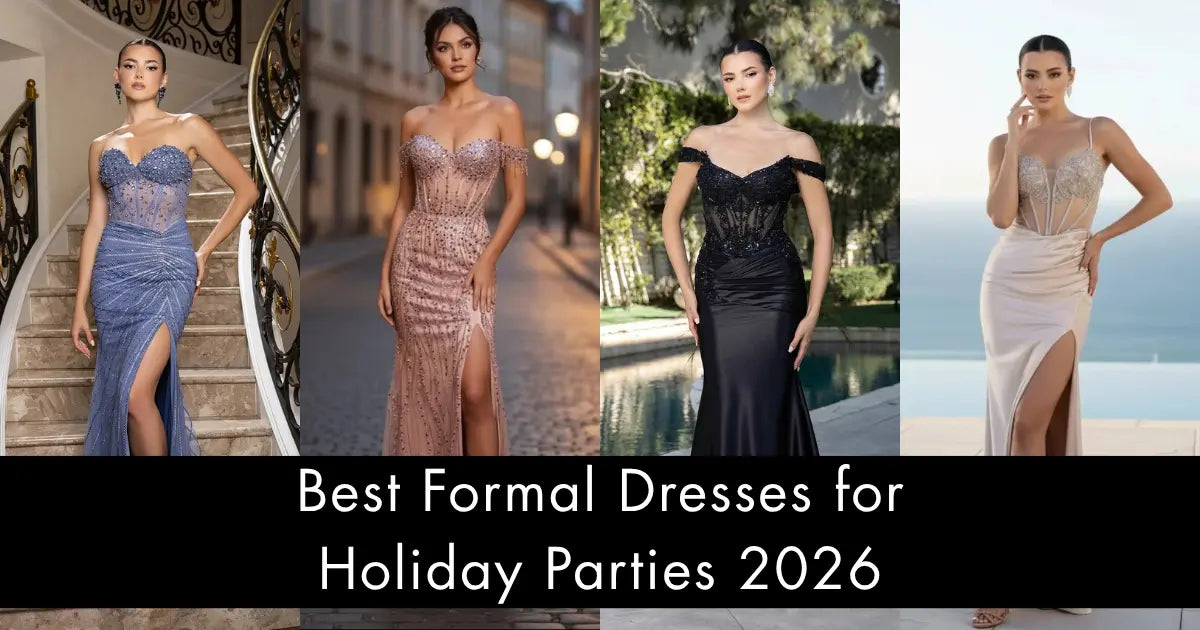
A corset prom dress has a structured bodice with lace-up or boned details at the back or sides that cinch and define the waist. Corset styling has been one of the strongest prom dress trends over the last few years and continues to be popular in 2026.
The practical benefit of a corset bodice is that it provides strong support without needing a bra and allows for some adjustability in sizing. Women between sizes often find that corset backs give them a better and more precise fit than a standard zipper closure.
Off the Shoulder Prom Dresses
An off the shoulder prom dress has the neckline sitting below the shoulders, with fabric that wraps across the upper arm. This style frames the collarbone and shoulders, which photographs particularly well.
Off the shoulder prom dresses work best for women with narrow to medium shoulders. The style draws attention to the upper body, so it pairs well with simpler skirts and less embellishment below the waist.
One Shoulder Prom Dresses
A one shoulder dress has a single strap or fabric panel that covers one shoulder while leaving the other completely bare. This asymmetrical neckline gives a dress a fashion-forward, editorial feel.
One shoulder prom dresses are a strong choice for women who want something that looks different from the crowd. The asymmetry creates visual interest without needing heavy embellishment elsewhere in the dress.
V-Neck Prom Dresses
A V-neck drops into a point at the center of the chest. The deeper the V, the more elongating the effect on the neck and chest.
V-neck prom dresses are one of the most flattering necklines for fuller busts because the vertical line creates length rather than cutting across the chest. They also work well for women who feel that strapless styles do not provide enough support, since a V-neck can include straps while still feeling open and elegant.
Halter Prom Dresses
A halter neckline ties or connects behind the neck while leaving the shoulders and back open. It creates a clean, athletic look that works well for minimalist styles and open back designs.
Halter necklines work best for women with narrower hips or a more athletic frame because the vertical lines draw the eye upward. The open back that usually comes with a halter style means standard bras are not an option, so look for built-in cups or an adhesive solution.
High Neck and Illusion Necklines
A high neck covers the collarbone and reaches up toward the throat. An illusion neckline uses sheer or mesh fabric, often decorated with beading, to create the appearance of a cutout while still providing coverage.
Both styles give a more editorial, fashion-forward appearance and work particularly well when the skirt is kept simple so the neckline stays the focus. High neck prom dresses also suit school dress codes that require more coverage.
Open Back Prom Dresses
An open back prom dress has a low-cut or cutout design at the back of the dress. The front can be completely modest while the back creates a dramatic reveal. Open back styles photograph exceptionally well and work across multiple silhouettes including A-line, mermaid, and bodycon.
The key consideration with an open back prom dress is that standard bras are not an option. Many open back dresses are built with internal support or boning, but confirm this before buying.
Prom Dresses with a Slit
A slit is a vertical opening in the skirt that runs from the hem upward. Slits can be subtle at the side or high and front-facing for a more dramatic effect.
Beyond the visual impact, a slit adds practicality. Floor-length prom dresses with a slit are significantly easier to walk and dance in than those without one. For women who want a long dress but do not want to feel restricted in movement, a side or front slit is a smart feature to look for.
Prom Dresses by Fabric and Detail
Sequin Prom Dresses
Sequin prom dresses use fabric covered in small reflective discs that catch and reflect light, making the dress appear to shimmer and shift color as you move. Sequin prom dresses are one of the most photographed dress choices at prom because of how well they show up in photos and videos, even in low light.
Sequin dresses are available in every silhouette from A-line to mermaid to bodycon. The fabric itself carries so much visual impact that the dress does not need heavy embellishment elsewhere. A simple silhouette in a full sequin fabric often looks more polished than a heavily decorated dress in a quieter fabric.
Satin Prom Dresses
Satin is one of the most popular prom dress fabrics because it holds its shape well, photographs cleanly, and works across every silhouette from A-line to mermaid to ball gown. The smooth surface gives the dress a polished, high-end appearance even at lower price points.
If you want a dress that looks put together without relying on embellishment, satin is the most reliable fabric choice.
Chiffon Prom Dresses
Chiffon is lightweight and flowy, which makes it the go-to fabric for A-line and empire waist styles. It moves well when you dance, sits comfortably all night, and works particularly well for outdoor or garden-themed proms where heavier fabrics can feel too stiff.
Chiffon dresses are usually layered so the skirt has enough body without being heavy.
Lace Prom Dresses
Lace is most commonly used on the bodice or as an overlay on top of a satin or chiffon base. It gives a dress a romantic, detailed look without needing beads or sequins. All-over lace tends to work better for A-line and sheath silhouettes where the pattern can be seen clearly.
Lace overlay on a ball gown skirt can feel busy, so simpler skirts pair better with a lace top.
Tulle Prom Dresses
Tulle is the structured netting used to create volume in ball gown skirts. It is what gives a full skirt its shape and makes it hold out from the body rather than drape flat. Multiple layers of tulle are sewn underneath the outer fabric of a ball gown, and the more layers, the fuller the skirt.
If you want a princess silhouette with real volume, look for dresses with multiple tulle layers rather than just a single underskirt.
Beaded and Embellished Prom Dresses
Beaded dresses use small stones, pearls, or glass beads sewn directly into the fabric to create pattern and texture. Unlike sequins, which cover the whole dress uniformly, beading is usually concentrated on the bodice, straps, or waistline with the skirt kept plainer.
The result is a dress that has detail and sparkle without the all-over shimmer of a sequin gown. Nox Anabel is the designer in our collection best known for this style if heavy embellishment is what you are looking for.
Velvet Prom Dresses
Velvet is a heavier, textured fabric that suits fall and winter proms better than spring events. It has a rich, deep appearance that works especially well in dark colors like burgundy, emerald, and navy.
Velvet holds its shape and drapes well, but it is not a practical choice if your prom is in a warm venue or during warmer months.
Simple Prom Dresses
Simple prom dresses use clean lines, minimal embellishment, and solid fabrics like satin, chiffon, or crepe. The impact comes from the cut and the fit rather than from decoration.
Simple prom dresses have grown significantly in popularity because they photograph in a timeless way and never look overdone. They also tend to age better in photos, meaning the dress looks just as good in pictures years later as it did on the night. Satin A-line dresses and simple chiffon gowns are the most popular expressions of this style.
How to Choose a Prom Dress Style for Your Body Type
Choosing a prom dress style based on body type is not about hiding anything. It is about finding the silhouette that feels most comfortable and confident for you.
Hourglass: Most silhouettes work. Mermaid, trumpet, and fit and flare follow your natural shape. A-line and ball gown add drama if you want more volume.
Pear-shaped: A-line and ball gown are your best options. They skim over the hips instead of hugging them.
Rectangle or straight figure: Fit and flare or a corset bodice will add the appearance of a waist. Ruching at the midsection also helps.
Petite or shorter: A-line, high-slit styles, and vertical detailing make you look taller. Avoid very full ball gown skirts as they can overwhelm a smaller frame.
Tall: Any silhouette works. Floor-length dresses are especially easy to pull off.
Plus size: Plus size prom dresses with a structured bodice, boning, or a corset panel give the best support and shape. A-line, fit and flare, mermaid, and trumpet all work well depending on how fitted you want the skirt.
No matter your body type, fit matters more than silhouette. A simple dress that fits you well will always look better than an elaborate one that doesn't.
When to Start Shopping for Prom
This is one of the most common things people leave too late. Here is a practical timeline.
| Time Before Prom | What to Do |
|---|---|
| 4-6 months | Start browsing styles. Order online if you find the right dress early. |
| 3-4 months | Ideal window to order. Most styles still in stock in your size and color. |
| 2-3 months | Last safe window for standard orders. Rush shipping may be needed. |
| 6-8 weeks before prom | Dress should be in hand. Start alterations now. |
| 2-3 weeks before prom | Alterations should be complete. Do a full fitting with your shoes. |
If you are ordering a gown that needs alterations, which most formal dresses do at least at the hem, build in that time before placing your order.
What About Alterations?
Most prom dresses will need at least minor alterations. This is normal and expected, especially with formal gowns.
The most common alterations are:
- Hemming: Shortening the length so the dress skims the floor correctly with your specific heel height
- Bodice or waist taking in: Adjusting the fit when the dress is slightly too large through the chest or waist
- Strap adjustments: Raising or shortening straps so the dress sits correctly on your shoulders
- Bustle: Adding hooks or loops on a full skirt so you can loop it up for dancing
Two things to remember:
First, always bring your shoes to your first fitting. The hem is measured based on the exact heel you will wear on prom night. Changing shoes afterward means redoing the hem.
Second, factor alteration costs into your total budget before you buy. A simple hem typically runs $20-$60. A full waist and bodice adjustment can be $80-$150 or more depending on where you go and how much work is needed.
How Much Should You Spend on Prom Dress?
Prom dress prices vary widely. Here is a straightforward breakdown of what to expect at each price point.
| Budget | What You Get |
|---|---|
| Under $100 | Basic silhouettes, limited embellishment, smaller size range |
| Under $200 | Better construction, more fabric and color options, wider sizes |
| Under $300 | Mid-range quality, stronger embellishment, more designer options |
| Under $400 | Designer-quality construction, better beading and lace, more unique styles |
| Under $500 | High-end construction, full designer collections, premium fabrics |
One practical note: a $150 dress that fits well will almost always look better on the night than a $400 dress that fits poorly. Set your budget, add an estimated $40-$100 for alterations, and shop within that combined number.
Top Prom Dress Designers Worth Knowing
The designer affects construction quality, how true the sizing runs, and how well the dress holds up through the night. Here is a quick look at who we carry and what they are known for.
Clarisse. Accessible price point with consistent quality. A reliable starting point if you are working with a set budget.
May Queen. Similar to Clarisse in price and quality. Wide range of silhouettes and a strong selection for extended sizes.
Nox Anabel. Known for heavy beading, sequin work, and embellished gowns. Best choice if you want maximum detail and sparkle.
Portia and Scarlett. Bold, fashion-forward silhouettes. The brand that tends to show up on social media first when new trends hit.
Primavera Couture. Evening-wear quality with clean construction and refined finishes. Best for shoppers who want a polished, understated look.
Royal Queen. Mid-range price point with the widest variety of silhouettes. A good option when you want plenty of choices without going over budget.
Browse the full designer range at Formal Dress Shops and filter by the name that fits your style and budget. Every collection is available in extended sizes with free shipping from Los Angeles.
Frequently Asked Questions
What is the most popular prom dress style?
A-line is consistently the most popular prom dress style because it flatters almost every body type and is comfortable to wear all night. Mermaid and ball gown are close behind for anyone who wants something more dramatic.
What is the difference between a mermaid and a trumpet prom dress?
A mermaid begins to flare at or below the knee. A trumpet begins to flare higher up, around mid-thigh, which gives you more room to walk and dance.
Are mermaid prom dresses hard to walk in?
Yes, more than most other silhouettes. The tight fit through the thighs limits your stride length. If you love the look but are worried about movement, try a trumpet or fit and flare instead.
What prom dress length is most formal?
Floor-length. For a traditional prom in a hotel or ballroom, a long dress is the standard. Short dresses work well for less formal events or after-parties.
Can I wear a jumpsuit or two-piece to prom?
Yes. A well-fitted jumpsuit or a two-piece set with a formal skirt is accepted at most proms today. The same rules apply: the outfit needs to read as formal, not casual, so fabric and fit matter more than the style of garment.
What should I wear if I do not know the prom venue or theme yet?
Go with an A-line or fit and flare silhouette in a solid fabric. These styles work for almost any setting and level of formality.
What is the difference between a prom dress and an evening gown?
Prom dresses are designed for high school events and tend to be trendier, more embellished, and worn by younger women. Evening gowns are built for adult formal occasions and usually follow a more classic, refined style. See the full breakdown in our guide on the difference between prom dresses and evening gowns.
How far in advance should I order my prom dress?
Order at least 3-4 months before prom if possible, and leave 6-8 weeks before the event for alterations once the dress arrives.
Do I need to get my prom dress altered?
Most people do. At minimum, a hem adjustment is usually needed to match the length to your shoes. Budget $40–$100 for basic alterations and factor that in before you buy.
Find Every Prom Dress Style at Formal Dress Shops
We carry every silhouette and style covered in this guide, from A-line and ball gown to mermaid, corset, sequin, and more. Every style is available in extended sizes.
Dresses ship from Los Angeles with free worldwide shipping and easy returns. If you prefer to try before you buy, the showroom is open for in-person visits. Browse the full collection at Formal Dress Shops.


Dejar un comentario
Este sitio está protegido por hCaptcha y se aplican la Política de privacidad de hCaptcha y los Términos del servicio.