


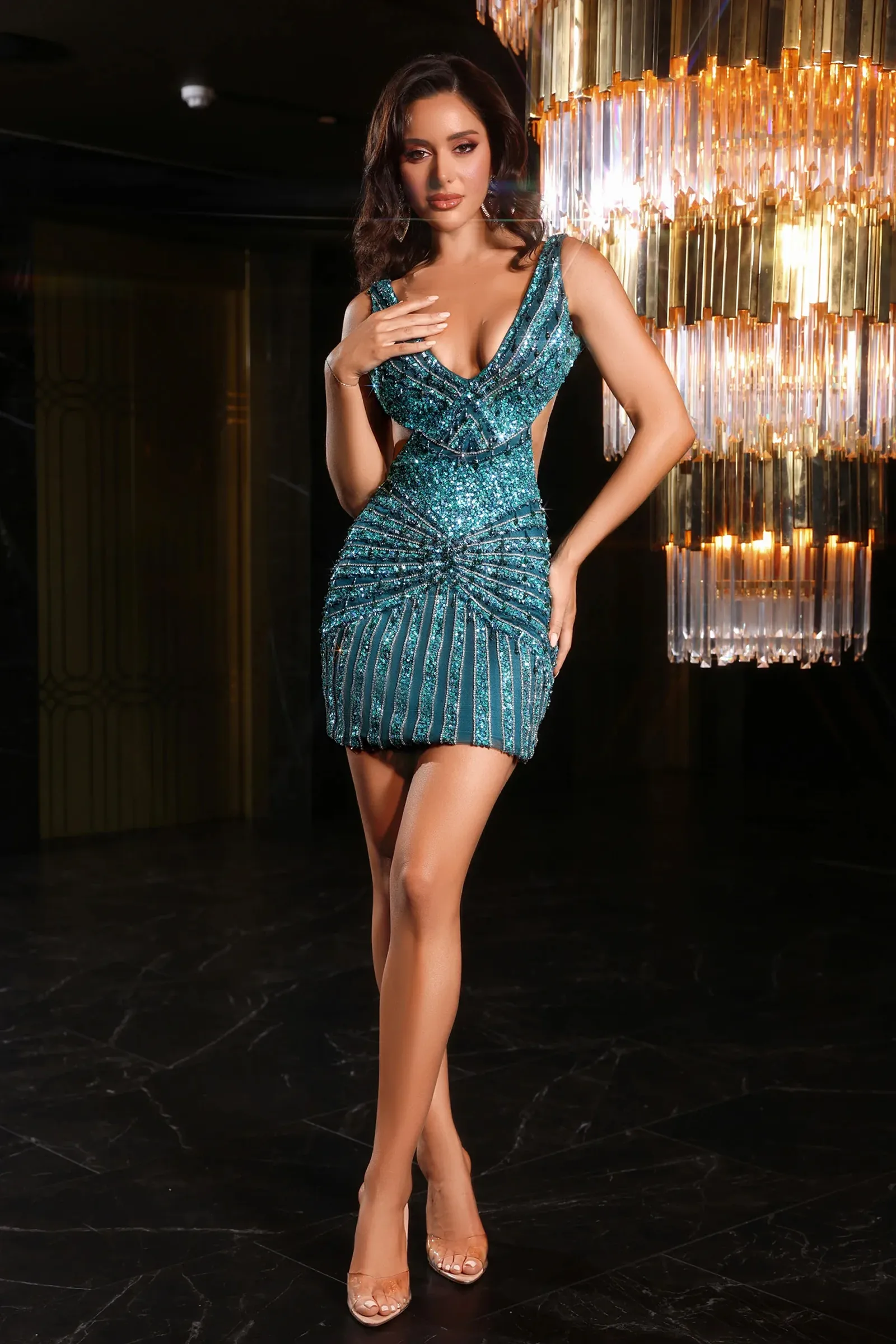
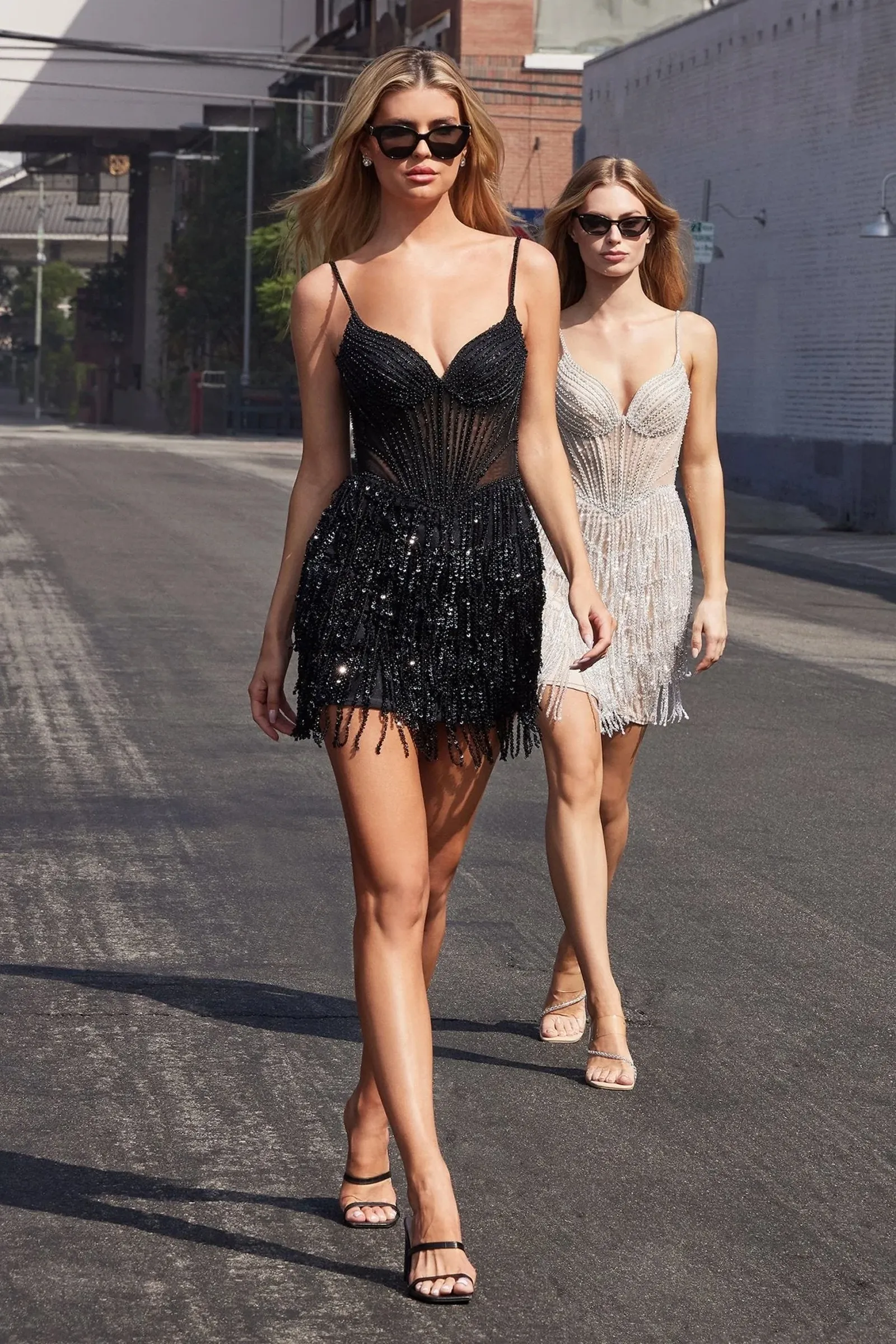
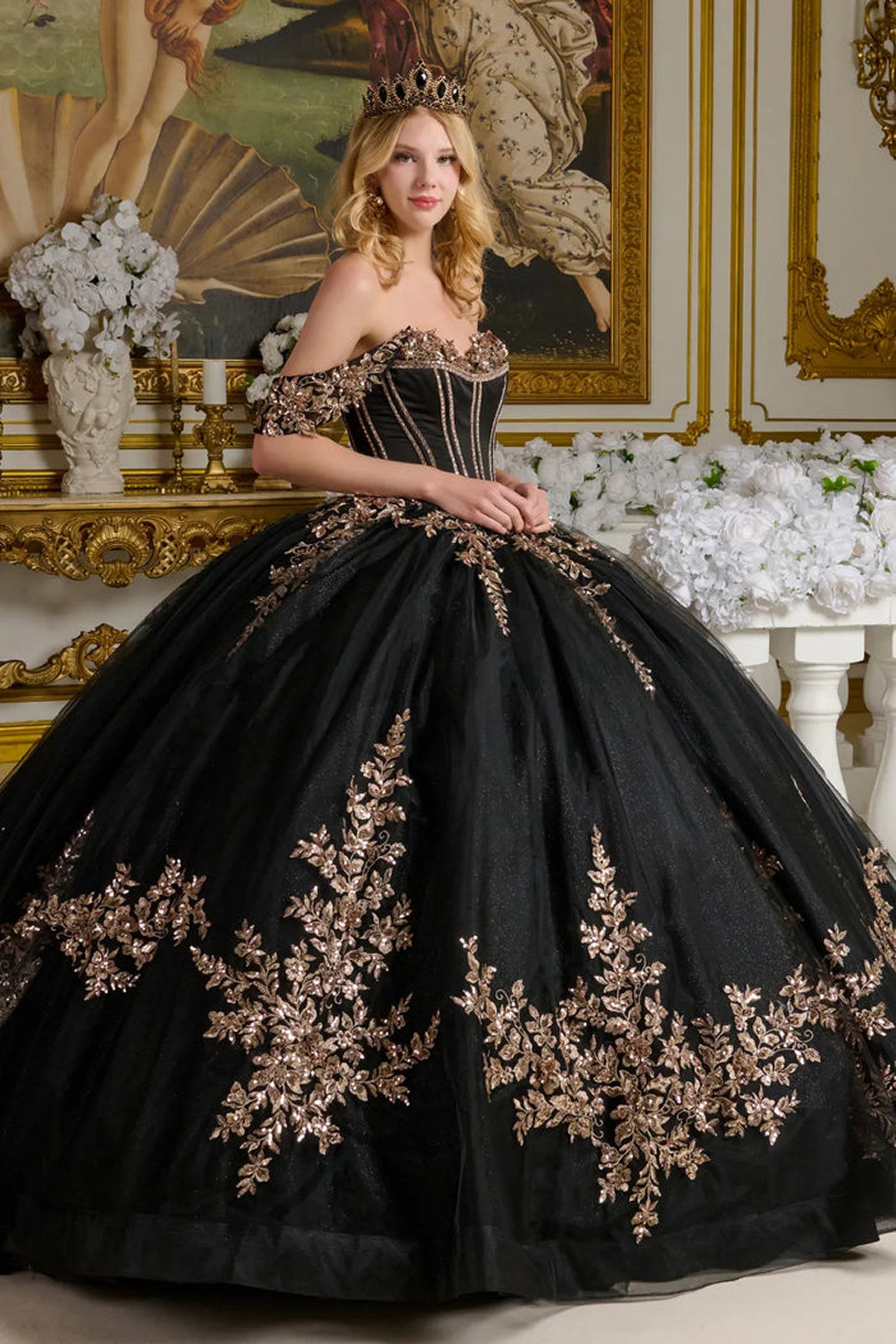

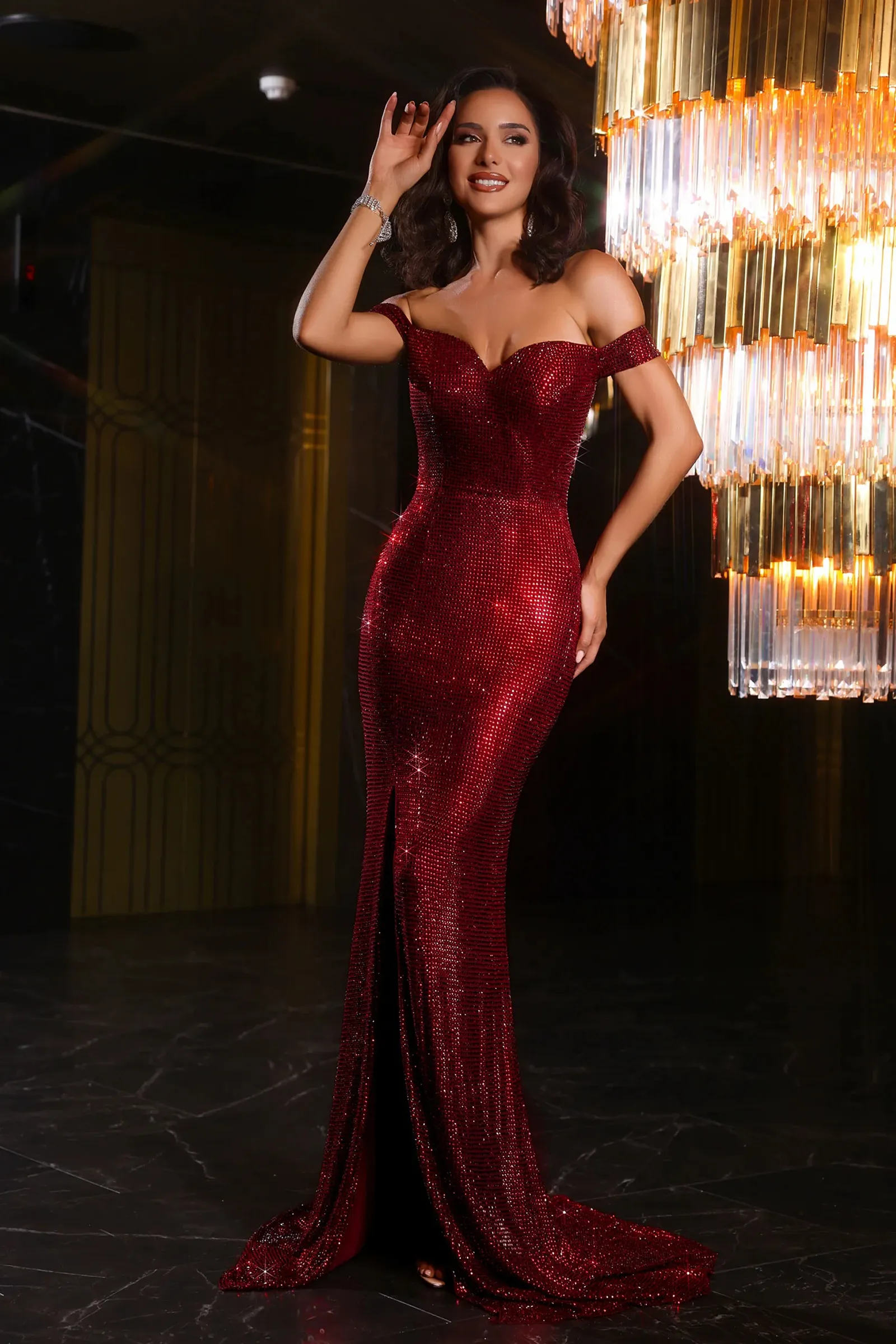
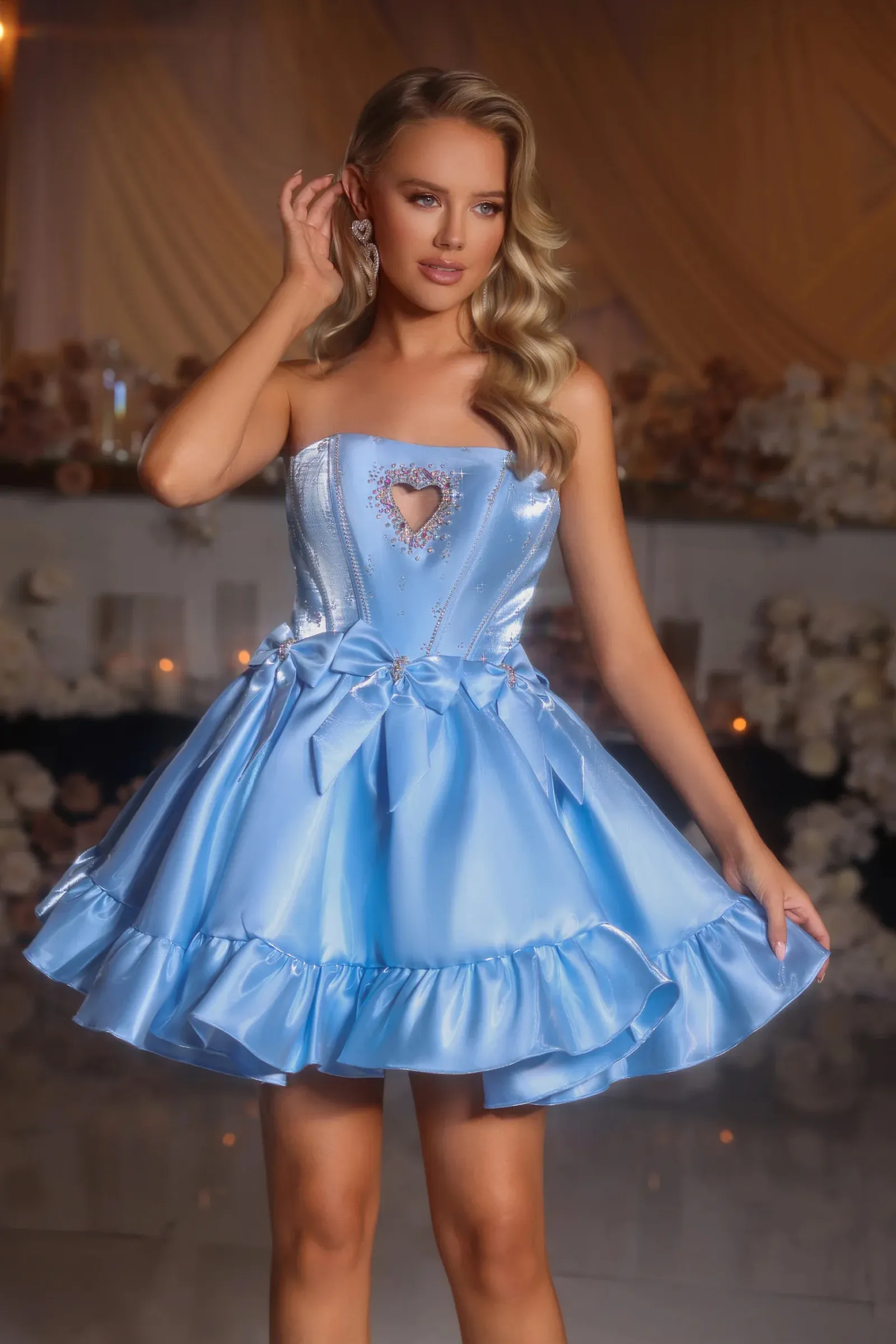
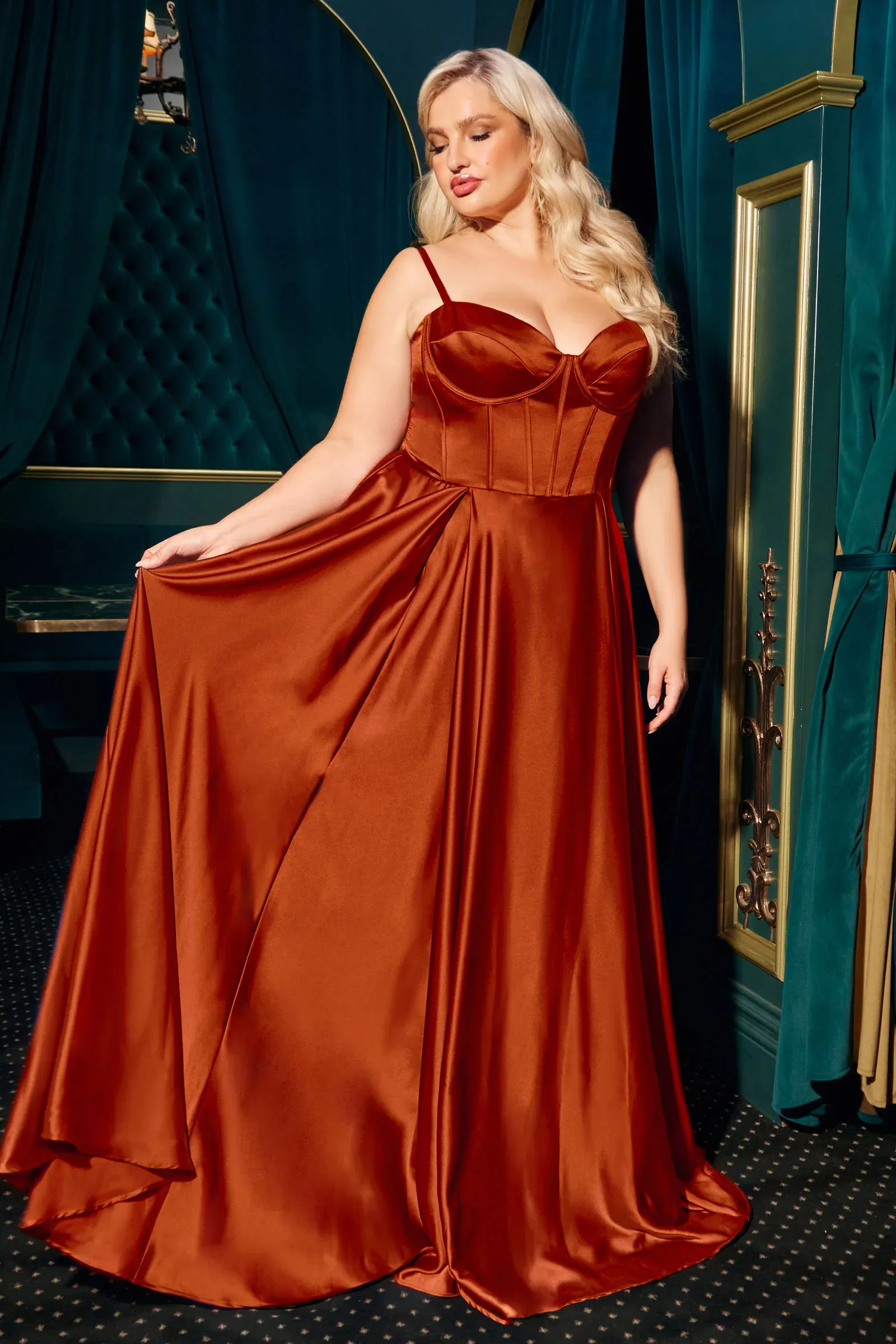
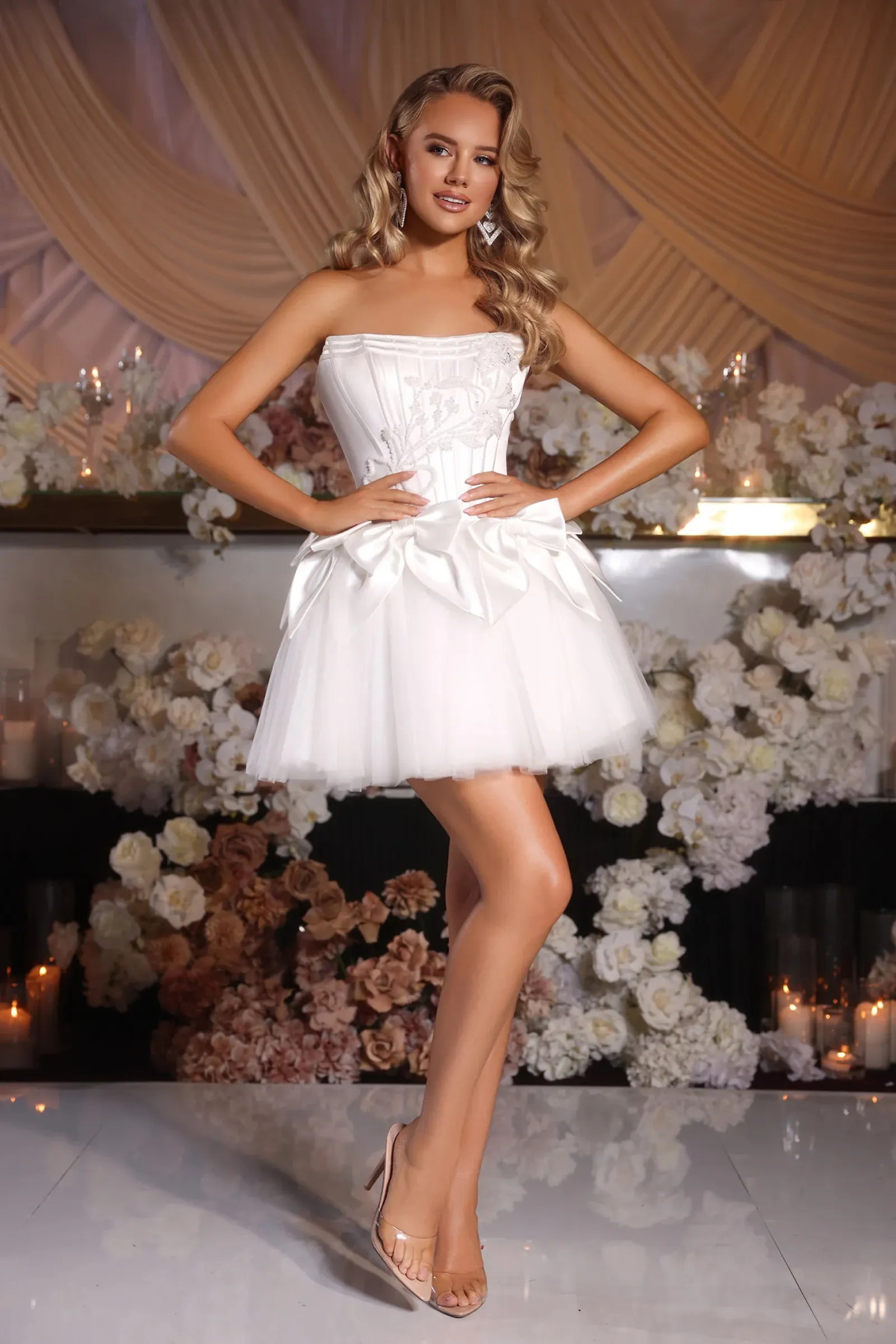
A-Line Prom Dresses


A-line prom dresses are the shape most people end up comfortable in, and there’s a reason for that. The skirt widens gradually from a fitted waist, which flatters nearly every body, hides whatever you’d rather not think about all night, and leaves room to actually move. The decisions here are about proportion and fabric rather than whether the silhouette suits you.
What Makes a Skirt A-Line
The name describes the outline: fitted at the waist, then widening in a straight line to the hem, like the letter A.
That gives you two things no other shape does as well. The waist is the narrowest point of the dress, so it defines your shape without squeezing, and the skirt skims rather than clings from the hip down.
Width varies a lot within the category. A gentle A-line is barely fuller than a straight skirt. A dramatic one needs real space around you, and it may want a petticoat underneath to hold its shape, which is worth asking about before you order.
A-Line, Fit and Flare or Empire Waist
Three shapes that get confused, and the difference is where the skirt starts.
- A-line flares from the natural waist in a straight line
- Fit and flare hugs through the hip before releasing lower down, so the fitted section is longer. Fit and Flare Prom Dresses show how much that changes the outline
- Empire waist starts the skirt just under the bust, giving a longer flowing line. Empire Waist Prom Dresses are the loosest of the three through the middle
If you want definition at the waist, A-line or fit and flare. If you want nothing fitted below the chest, empire is the comfortable choice.
How Your Height Changes the Hem
A-line hems need more attention than fitted ones, because the width makes an error obvious.
- Too long and the front hem catches under your shoes every time you step
- Too short and the skirt reads like it was made for someone taller
- A full A-line needs the hem level all the way round, which is a bigger job than shortening a straight skirt
- A full A-line needs the hem level all the way round, which is a bigger job than shortening a straight skirt. Long Prom Dresses are where most of the floor-length versions sit
Try it on in the shoes you plan to wear, then walk, don’t just stand. If you’re shorter, Petite Prom Dresses are cut with a shorter bodice as well as a shorter hem, which matters because dropping the waist seam is what makes a borrowed-looking dress.
Tulle or Satin on an A-Line
 The same silhouette feels completely different depending on what it’s made from.
Tulle gives you volume and movement, and layered tulle photographs beautifully. It’s also light, which helps across a long night. Tulle Prom Dresses are where the fuller versions live.
Satin holds a smoother, more structured line and reads more grown-up. It shows every crease after a long dinner, which tulle doesn’t.
Chiffon sits between the two, soft and flowing, and it’s the easiest in warm weather. A pattern changes the shape again, since a full skirt gives a print room to show, which Floral Prom Dresses and Print Prom Dresses both demonstrate.
Chiffon sits between the two, soft and flowing, and it’s the easiest in warm weather.
Why It’s the Easiest Shape to Dance In
This is the practical argument for an A-line, and it’s a strong one.
Your legs have room to move, so you can walk normally, take stairs without lifting the skirt, and dance without planning each step. Sitting is simple too, because the skirt falls away from your lap rather than pulling across it.
Compare that to a fitted mermaid shape, where every one of those actions needs thought. If you’re in the grand march, going to an after-party, or just want to stop thinking about your dress by nine o’clock, this is the shape that lets you.
One caution: a very full A-line takes up space. Check you can get into a car and through a doorway comfortably if the skirt is on the dramatic end.
Necklines That Suit a Full Skirt
With volume below, the neckline is what balances the look.
- A sweetheart or straight neckline keeps it classic and lets the skirt lead
- A halter or high neck adds a vertical line, which stops a full skirt dominating
- Strapless Prom Dresses suit an A-line well, since the bodice has a defined waist to anchor to
- Prom Dresses with Sleeves balance a wide skirt by adding weight to the top half
- A halter or high neck adds a vertical line, which stops a full skirt dominating
- A V-neck or square neck breaks up a wide bodice without adding coverage
Whichever you pick, check how the bodice behaves when you raise your arms. A fitted A-line bodice that rides up takes the whole skirt with it.
Simple or Full Princess
The same shape serves two completely different looks, and it’s worth deciding which you want before you shop.
A clean A-line in plain satin with no decoration reads modern and understated. Simple Prom Dresses are where to look if that’s the direction, and the cut does all the work.
A layered tulle A-line with beading, a sweetheart neckline and a full skirt is the other end entirely. Prom Dresses with a Princess Look lean into that.
A layered tulle A-line with beading, a sweetheart neckline and a full skirt is the other end entirely, and adding a train from Prom Dresses with Train pushes it further again. Prom Dresses with a Princess Look lean into that.
Both are A-lines. Searching by silhouette alone will show you both, so filter by how much drama you actually want.
Pockets, a Clutch and Where Your Phone Goes
A-line skirts are the silhouette most likely to have pockets, and they’re worth hunting for.
The volume at the hip gives a maker somewhere to hide a seam pocket without spoiling the line, which a fitted dress can’t do. If a listing mentions pockets, that’s a genuine practical advantage over a whole evening.
What to check:
- Whether the pocket is sewn into a side seam or set into the lining
- How it sits when the pocket is empty, since a gaping pocket shows on satin
- Whether it holds a phone without the shape showing through a light fabric
Without pockets, plan a small clutch or a wristlet before the night. Formal dresses have nowhere to put a phone, a lipstick or a ticket, and handing everything to someone else all evening gets old fast.
Getting There and Back in One Piece
A few logistics that come with a fuller skirt.
- Sit in the car before prom night if the skirt is very full, so you know how to gather it
- Hang the dress rather than folding it, since tulle creases hold
- Steam it instead of ironing, especially on anything with beading
- Keep a safety pin and a small sewing kit with you for a dropped hem on the dance floor
For length alternatives in the same easy shape, Short Prom Dresses and Knee Length Prom Dresses give you the same freedom with less fabric, and the wider Prom Dresses range covers every other shape.
FAQ
Does an A-line suit every body type?
It’s the most widely flattering prom silhouette, because it defines the waist and skims everything below it. The width of the skirt is what you adjust to taste rather than the shape itself.
What’s the difference between A-line and ball gown?
An A-line widens gradually in a straight line. A ball gown flares sharply from the waist into a much fuller skirt, usually with a petticoat holding it out.
Do I need a petticoat under an A-line?
Only for the fuller tulle versions, and many come with the volume built in. Check the listing, since adding one changes the hem length.
Is an A-line easy to alter?
Taking in the bodice is straightforward. Shortening the hem costs more than on a straight skirt, especially on layered tulle, since each layer is cut separately.
Can I wear an A-line dress again after prom?
A simple satin one works for other formal events easily. A heavily beaded tulle version reads prom-specific, so think about that if a second wear matters to you.

Follow us


