





Mermaid Prom Dresses


Mermaid Prom Dresses with Distinctive Flares
Mermaid prom dresses follow the body through the waist and hips before flaring toward the hem, creating a clearly shaped formal silhouette. Where the flare begins makes a noticeable difference to both appearance and movement. A dress that widens around the knee will feel different from one that expands slightly higher. Compare bodice construction, skirt volume and the fabric finish to find the mermaid style that suits your prom plans.
Where the Mermaid Skirt Begins to Widen
The flare is the defining feature of a mermaid silhouette. A lower flare produces a longer fitted line, while a higher flare can allow more volume around the thighs. Different designers interpret this shape differently, so the label alone does not tell you exactly how the garment will fit.
Look at full-length side photographs. They help show the transition from fitted skirt to wider hem and reveal whether the dress has extra panels or a train. Trumpet Prom Dresses offer a useful comparison because the widening can begin higher in the skirt.
Do not rely on general claims about which body type should wear a mermaid cut. The relevant questions are whether you like the outline and whether the measurements, stride room and bodice fit work for you.
Bodice Support Without Guessing
A mermaid gown may use straps, structured seams or a corset-inspired upper section, but these features are not interchangeable. Straps can influence how the neckline sits; shaped seams define the visual waist; a lace-up closure may allow some adjustment if functional.
Corset Prom Dresses are useful for comparing shaped bodices. A strapless mermaid can place more emphasis on the upper edge, while an off-the-shoulder version frames the arms. Inspect closures and material notes rather than assuming built-in support from appearance.
Because the skirt is close through the hips, the waist and hip measurements are particularly important. A perfect bust measurement does not guarantee that a narrow lower skirt will fit in the same size.
· Locate the flare point in full-length photos.
· Compare hip measurements with the size chart.
· Note whether a slit or train changes movement.
Movement, Dancing, and Hem Shape
A mermaid silhouette can restrict stride depending on where the fitted section ends and how the fabric stretches. A slit, insert or higher flare may affect movement, but you need product-specific information to know how much. The width of the bottom skirt also changes how the dress moves across the floor.
When comparing photos, examine the model standing, walking and turning if such images are available. A train adds length behind the hem and may require more attention on stairs or crowded floors. Prom Dresses with Slit provide another route for investigating an open-skirt design.
Try to distinguish the visual effect you want from assumptions about comfort. Some fitted gowns have flexible fabric; others may not. Measurements and construction provide better information than silhouette names alone.
· Locate the flare point in full-length photos.
· Compare hip measurements with the size chart.
· Note whether a slit or train changes movement.
Lace, Sequins, and Smooth Fabric on a Mermaid Cut
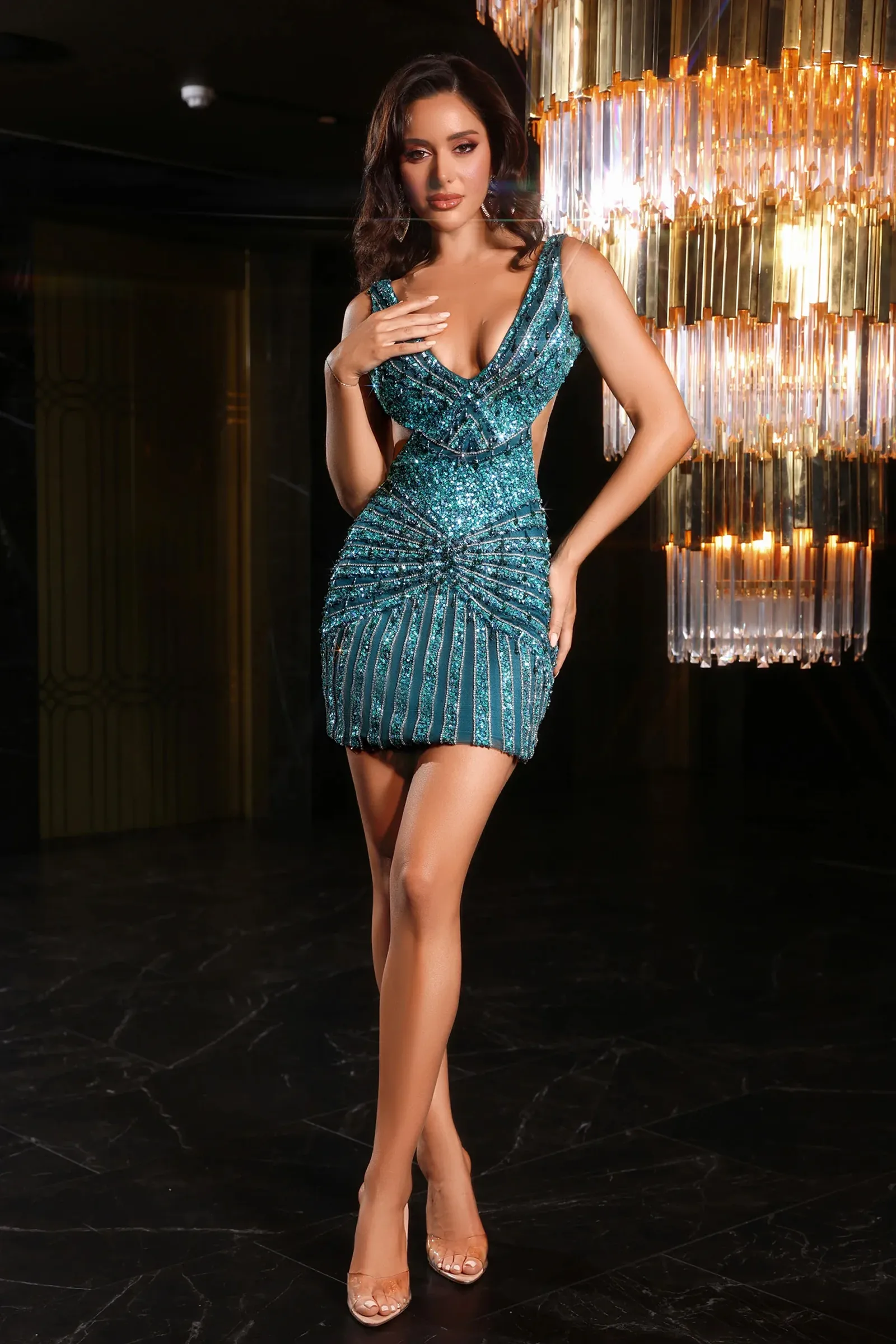
Mermaid shaping is often clear on smooth fabrics because the seams and outline remain visible. Lace overlays add pattern across the closely fitted section, while sequins create moving reflections that draw attention to the flare. These finishes can make similar cuts look dramatically different.
If intricate pattern is your priority, compare Lace Prom Dresses. If you prefer reflective detail across the skirt, Sequin Prom Dresses offer a separate finish. A clean design allows the flare itself to remain the main visual feature.
Watch how decoration transitions at the flare seam. An embellished bodice with a plain flared skirt creates contrast, while uninterrupted pattern may make the gown look more continuous. Close-ups are useful at this junction.
· Locate the flare point in full-length photos.
· Compare hip measurements with the size chart.
· Note whether a slit or train changes movement.
Colors That Emphasize the Outline
A dark matte shade can make the dress outline the dominant feature. Brighter colors emphasize the wider lower skirt as a large area of color. Metallic finishes highlight folds and the changing angles of the flared section. Which direction you choose depends on whether you want shape, color or shine to lead.
Red Prom Dresses bring a strong color option to compare against Black Prom Dresses. For a reflective alternative, look at Silver Prom Dresses and assess whether surface shine enhances the mermaid shape for you.
If two dresses are both described as mermaid gowns, compare their waist seams and flare height before deciding based on color. Those differences may matter more than the shade when worn.
· Locate the flare point in full-length photos.
· Compare hip measurements with the size chart.
· Note whether a slit or train changes movement.
A Practical Shortlist for a Close-Fitting Gown
Start with your body measurements and the specific designer chart. Next compare the flare height, skirt length, closing mechanism and any decoration close to side seams. A close fit through the hips means that a small change in dimensions can be more noticeable than in a wide A-line skirt.
Alterations can affect the lower silhouette, particularly if a change needs to preserve the flare and its panels. Get advice on the actual garment rather than assuming an alteration can be made without affecting shape.
Explore different fitted styles at Formal Dress Shops. If you want more freedom through the skirt, the broader Prom Dresses collection and A-Line Prom Dresses offer useful silhouettes to compare.
· Locate the flare point in full-length photos.
· Compare hip measurements with the size chart.
· Note whether a slit or train changes movement.
Flare Panels and the View from Behind
A mermaid gown is not defined only by the front view. The back can include added panels, a longer hem or a train that changes how the flare looks when walking away. A skirt with several inserted panels often reads differently from one that widens in a simpler continuous shape.
 Look at the dress from behind and from a three-quarter angle if the listing provides those photographs. They can reveal whether the flare is symmetrical and how the fabric is distributed around the lower skirt.
If a dress is heavily embellished, alterations around the flare may also affect motif placement. This is worth considering before committing to a design that needs substantial changes in length or fit.
A useful way to compare two mermaid dresses is to align the photographs at the waist. You can then judge which skirt stays fitted longer and whether the flare changes gradually or suddenly. That comparison can reveal differences hidden by similar product titles and dramatic photo poses. It also makes the differences between a softly widening skirt and a pronounced flared hem much easier to recognize.
Frequently Asked Questions
Is a mermaid gown the same as a trumpet gown?
The terms can overlap, but trumpet gowns often begin widening higher than classic mermaid designs. Compare the actual flare point in product images rather than relying entirely on the label.
Can a mermaid prom dress have a slit?
Yes, some designs combine a fitted silhouette with a slit. Its position and height vary by garment, so examine the product images and details.
Does a mermaid silhouette always have a train?
No. Some finish at floor length with no extended back, while others include a train. The product description should specify the relevant hem details.
Can a tailor shorten a mermaid gown?
Often alterations are possible, but changes near a shaped hem can affect the flare. Have an alterations professional assess the particular gown before making plans.

Follow us


